
China Electronic Components Wholesale: Global Supply Guide
Introduction
1. Why Choose China for Electronic Components Wholesale?
2. Top 6 Electronic Components Suppliers in China
3. How Buying Wholesale Capacitors & Resistors at Cost-effective Pricing Works
4. Verifying Quality: Certifications for Reliable Components
5. Overview of Automotive Electronics Wholesale & Current Trends
6. Online Platforms vs. Offline Markets: Procurement Strategies
7. MOQ Negotiation: Balancing Inventory Costs & Supplier Terms
8. Counterfeit Prevention: Testing Components Pre-Shipment
9. Logistics & Duties: Calculating Total Landed Costs
10. Future Trends: AI, 5G & Green Electronics Impact
Conclusion
Introduction
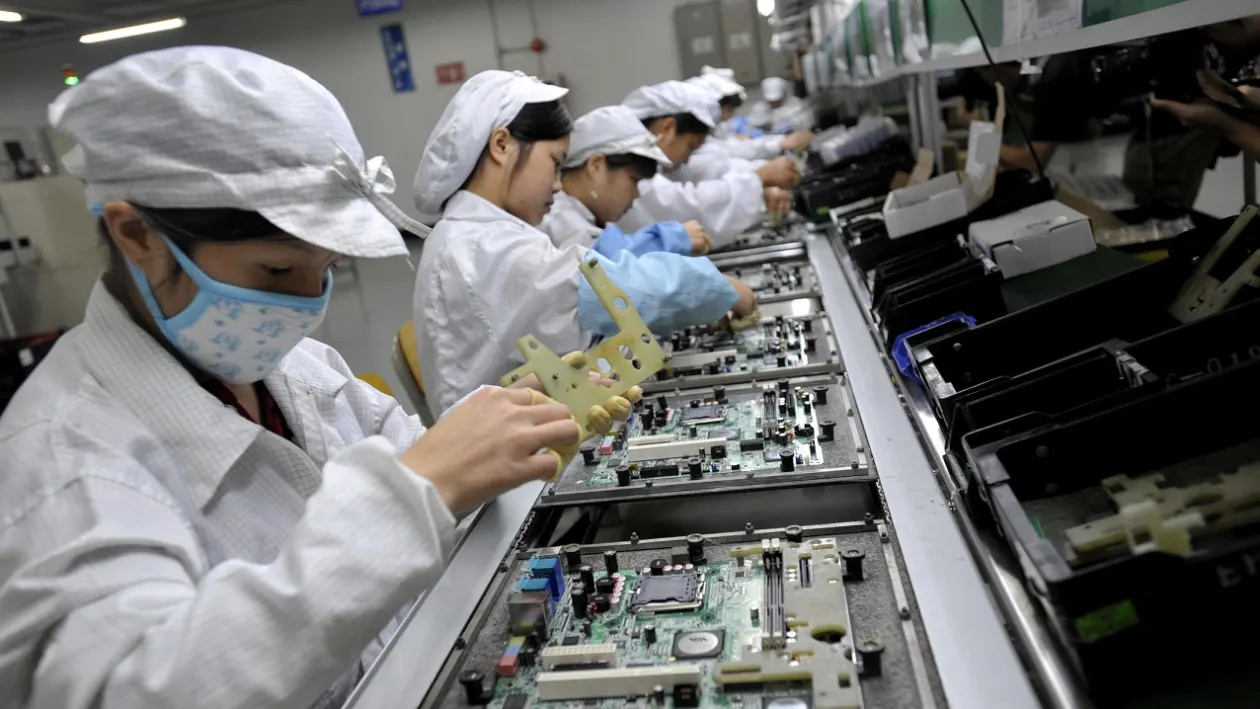
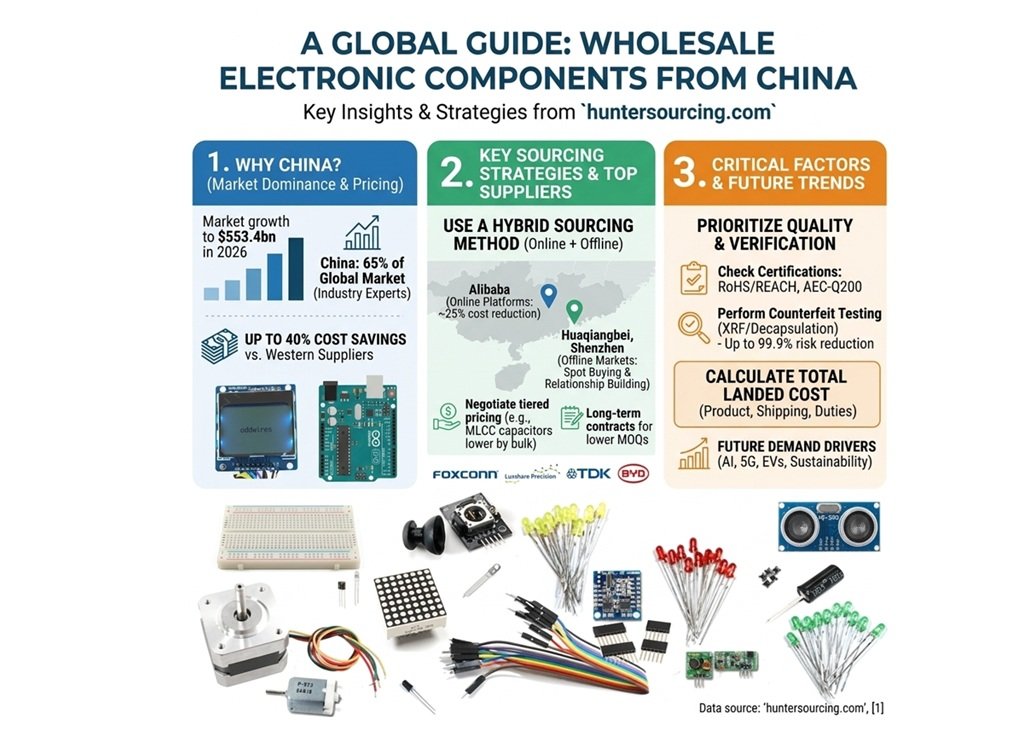
Today, China is the world’s leading manufacturer of electronic components. According to industry experts, this country dominates 65% of the global market. Data from IBISWorld indicates that China’s electronic components market size will reach $553.4bn in 2026.
Today, Chinese suppliers offer high-end, yet cost-effective electronic parts for different purposes, including:
● Automotive
● Telecommunication
● Consumer electronics
In this guide, you’ll discover the top 6 electronic components wholesale distributors in China. Additionally, you’ll find effective strategies for sourcing capacitors and other electronic parts from these verified suppliers
1. Why Choose China for Electronic Components Wholesale?
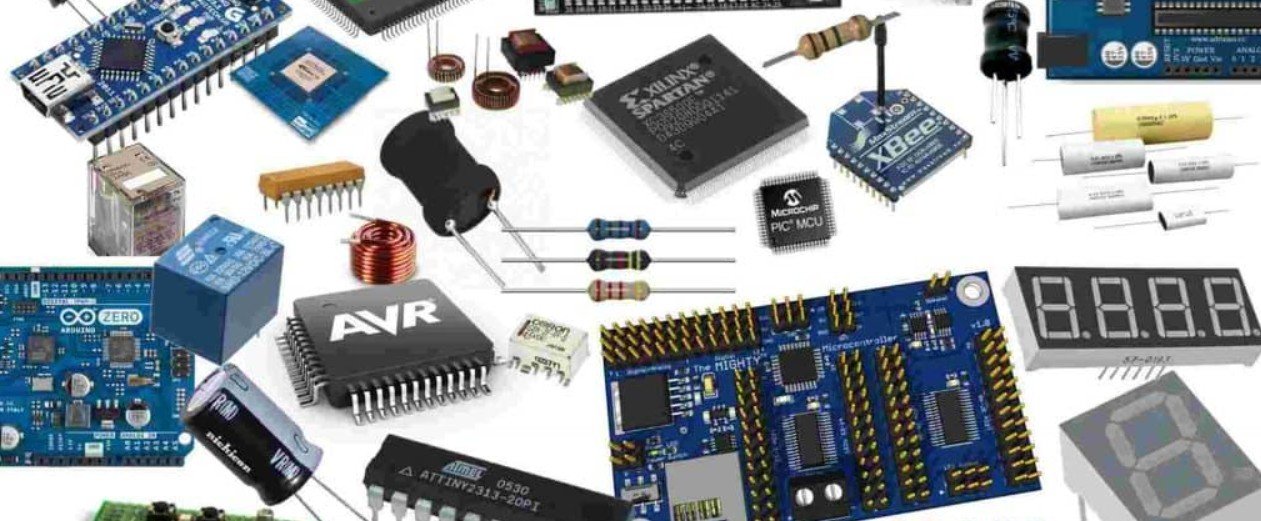
For practical reasons, China is the go-to destination for electronic components wholesale for many businesses. In this country, manufacturers enjoy massive economies of scale due to tightly integrated ecosystems in Shenzhen and some other hubs. This benefit, including the following factors, keeps unit costs low, even for huge orders:
● Dense supplier networks
● Shared infrastructure
● Skilled workforce
● Highly concentrated production
● Government policies
That said, choosing China for electronic components wholesale is worth it because it allows you to save up to 40%. You’ll basically get better per unit cost compared to what you get from most Western suppliers. This pricing advantage will allow you to maintain better profit margins without compromising quality.
Apart from pricing, China also offers very efficient supply chains. This is especially true for markets like Huaqiangbei in Shenzhen, which handles roughly $30 billion in yearly transactions. These markets allow for the quick sourcing of electronic components in bulk, all in one place.
2. Top 6 Electronic Components Suppliers in China
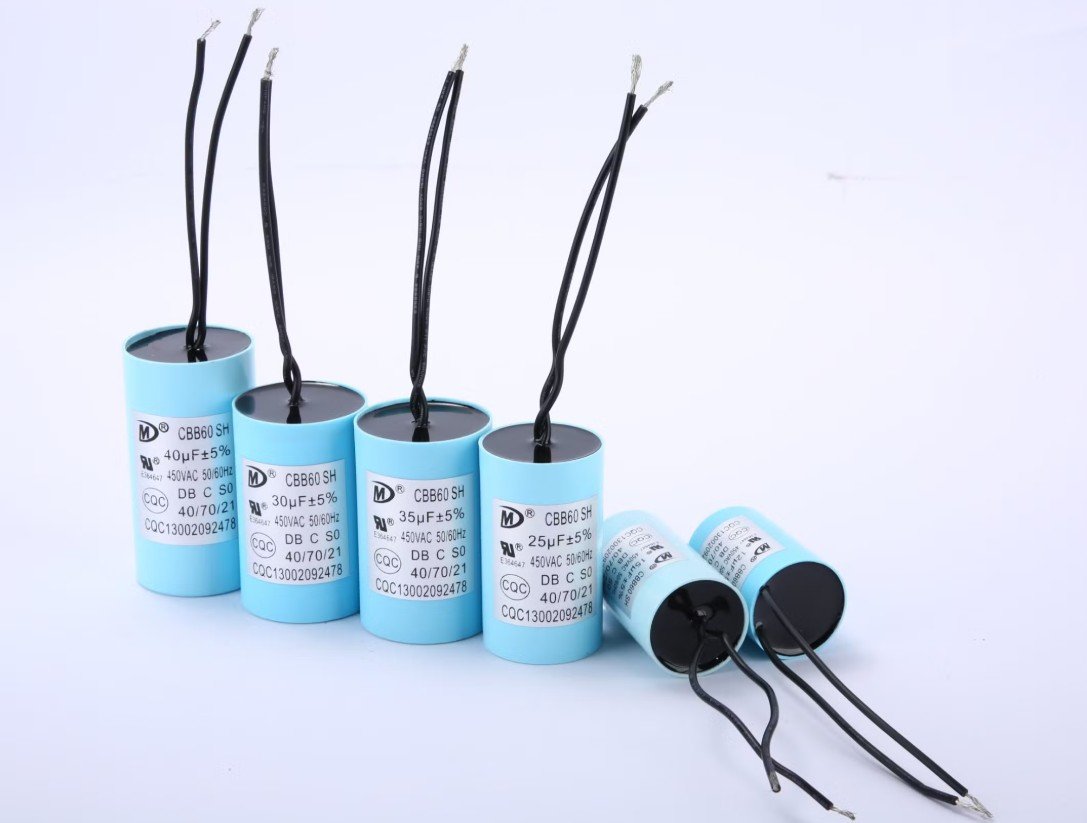
The right electronic components supplier in China should strike a balance of the following factors:
● Quality
● Cost efficiency
● Flexible minimum order quantities (MOQs)
After thorough research, below are six reliable Chinese suppliers you’ll never go wrong partnering with for your business today:
2.1: Foxconn
Today, Foxconn sells different kinds of electronics components. Some common products you can source from this supplier include:
● Connectors
● IC assemblies
● Consumer electronics components
Today, this giant Chinese company offers a minimum order quantity of about 5,000+ units. Furthermore, this company has many certifications, including ISO 9001 and IATF 16949. With strict adherence to safety & quality standards, Foxconn is certainly a true go-to brand for businesses interested in high-volume orders.
2.2: Luxshare Precision
Another reliable supplier worth dealing with is Luxshare Precision. This distributor specializes in automotive inductors of different kinds. With the AEC-Q200 certification, you can rest assured that Luxshare’s products are highly reliable against harsh environmental factors.
Luxshare Precision has partnered with several industry giants. A good example is Tesla; the company supplied battery management system (BMS) components for the Tesla Model 3.
2.3: TDK China
Key products offered by TDK China include:
● MLCCs
● Sensors
● Passive components
What makes this company even more special is the fact that its lead time is within 12 weeks. This is way faster than the global standard of 20 weeks. Apart from faster turnaround, TDK is also worth partnering with because it consistently offers reliable components.
2.4: BYD Electronics
As a B2B buyer looking for the perfect supplier of semiconductors, we recommend choosing BYD Electronics. This company offers different types of products, including:
● Semiconductors
● Power management ICs
● Connectors
One highlight of BYD is its vertical integration. The company handles all operations in-house, from design to production and packaging. With fewer middlemen, you can always expect lower costs & fewer defects.
2.5: Sunlord Electronics
Sunlord is a big name when it comes to the distribution of inductors. Additionally, this brand is also a reliable supplier of EMI filters and RF components.
One highlight of Sunlord Electronics is its support for flexible MOQs and competitive pricing. This means this company also works with both small and mid-sized buyers. Sunlord’s ability to offer cost-effective yet quality inductors is why you won’t go wrong partnering with the company.
2.6: Goertek
Some major electronics components offered by Goertek include:
● Acoustic components
● MEMS microphones
● Wearable tech spare parts
Today, Goertek is a major distributor of electronics components to global brands that deal with audio devices & AR/VR products. This means you can always rely on this brand for advanced audio components and smart device parts.
3. How Buying Wholesale Capacitors & Resistors at Cost-effective Pricing Works
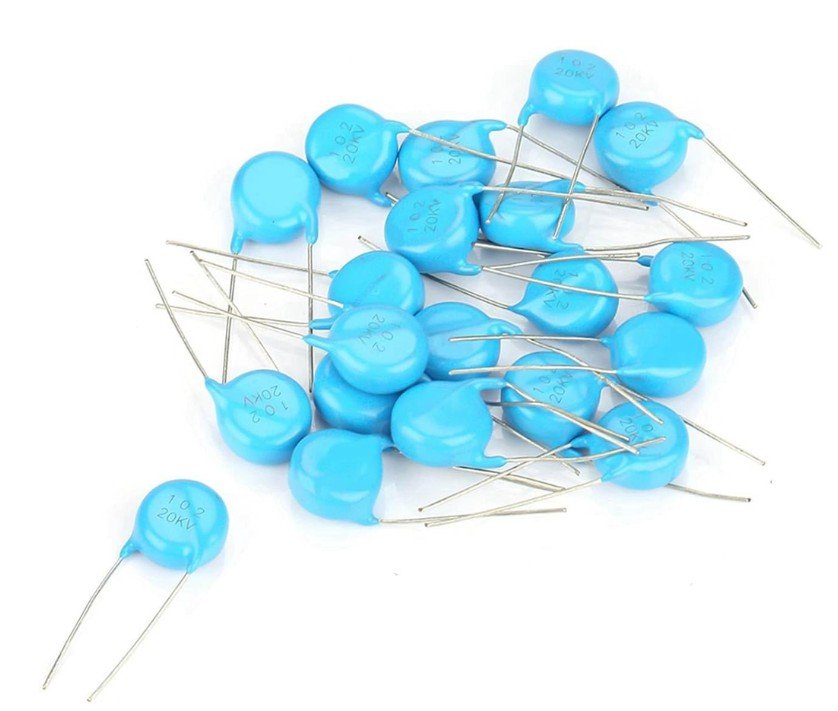
To cut costs and enjoy better profit margins, you need to understand exactly how buying wholesale resistors & capacitors works. Here’s where the need to prioritize strategic bulk purchasing comes in. When done right, sourcing wholesale electronics components from China can help you cut costs up to 80%.
When buying in bulk, we recommend prioritizing tiered pricing. This simply means you’ll get a lower cost per unit as you increase your order quantity. For instance, an MLCC 0603 10μF capacitor goes for about $0.015 per unit on retail-focused platforms like Digi-Key. However, you can get it at about $0.003 per unit when you order in large volumes from trusted suppliers.
Furthermore, chip resistors sell as low as $0.0005 per unit when you order over a million units. This is especially true when you partner with reliable manufacturers, such as TDK China.
Bottom line: Leveraging tiered pricing when buying in bulk allows you to cut costs and make more profits. Top-rated suppliers are ready to give you better discounts as you increase your order quantities.
A great way to identify these sellers is by using Alibaba’s Volume Discount filter. This function makes it incredibly easy to cross reference pricing brackets. Although saving cost is a thing of importance, you should never compromise on quality. And this is the reason why we suggest selecting from these Chinese electronics components distributors mentioned above.
Some of other important factors to take into consideration when choosing the right supplier on Alibaba are:
● Supplier certifications
● Sample offering
● Compliance with safety standards
● Leed times
4. Verifying Quality: Certifications for Reliable Components
As previously stated, “quality” is important when shopping wholesale for electronics components. Even the smallest defects can quickly lead to costly failures. To avoid this issue, checking quality certifications is key during bulk purchasing.
But how exactly do you prioritize quality when sourcing electronics components wholesale?
● Check certifications
The first step involves checking for certifications. For instance, a RoHS/REACH certification shows that the product is lead-free and eco-friendly. The AEC-Q200 is another certification that shows a component comes with automotive-grade thermal resilience. This means the product will still function perfectly when exposed to extreme conditions.
One good thing about product certifications is that they help to lower the risk of equipment failure. Latest data shows that buying certified components can help you cut failure rates by up to 90%. This will help you get better value from your parts, especially if you’re dealing with bulk production.
Unfortunately, not staying compliant can cost you a lot of money. A good example is when a U.S. IoT firm purchased nin-certified capacitors in 2022. The electronic components were later recalled, leading to a loss of roughly $2M.
● Verification matters
Certification is crucial but certainly not enough. In addition, you need to understand how to verify the products. One good approach is to seek XRF reports. This allows you to check and confirm the exact material composition of electronics parts.
Bottom line: Both certifications and quality testing are very important during the sourcing process. Both quality checks will give you better insights into a product’s integrity.
5. Overview of Automotive Electronics Wholesale & Current Trends
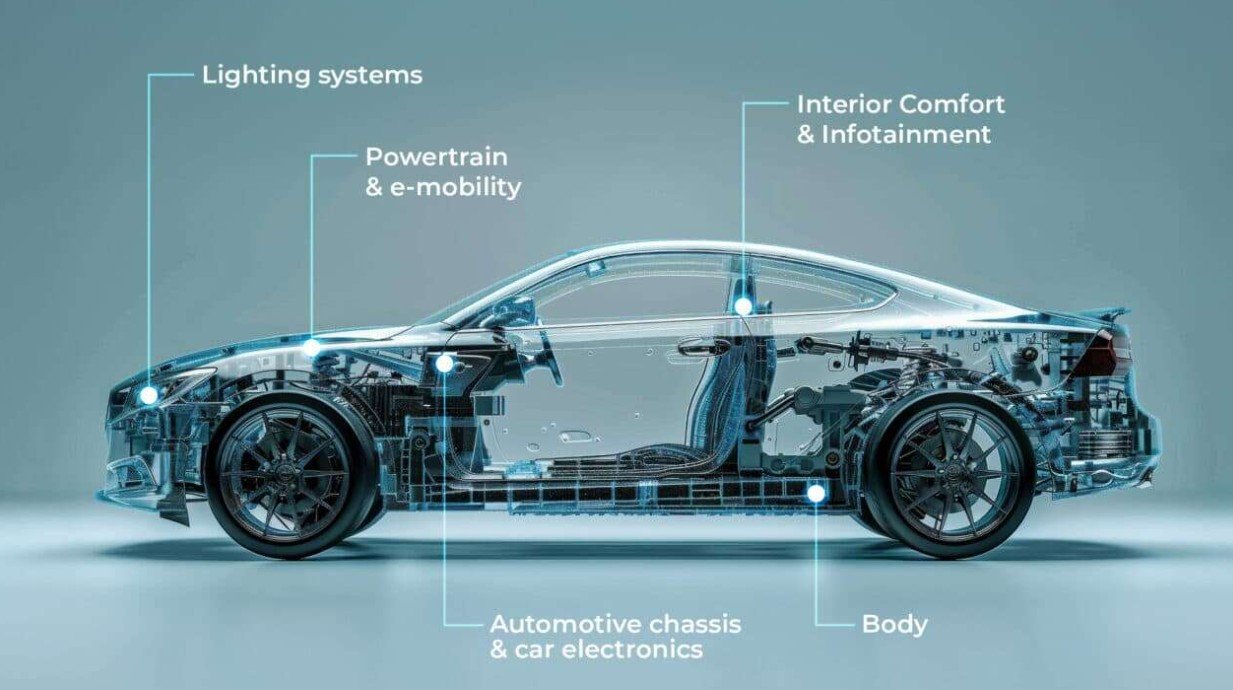
Based on our analysis, we can safely state that the wholesale industry is gradually growing and boosting. Most of this growth is attributable to a significant transition from ICE vehicles to electric ones. This sent key components like MOSFETs and power inductors soaring to 40% higher demand through the industry as consumers start their shift toward EVs.
Sales in parts for electric vehicles exploded to $18 billion in 2024. MOSFETs is one of the hottest parts in these categories. They primarily improve power conversion.
How about power inductors where demand also spurred higher. Hence, why Sunlord Electronics and even more brands sold the most. The device users will use several power inductors for stabilizing their electric vehicle (EV) circuits using the needful.
Würth Elektronik – Another good Chinese supplier. For example this company provided BMW’s ISO 26262-certified BMS.
6. Online Platforms vs. Offline Markets: Procurement Strategies

So, when we talk about buying electronics components wholesale from China, you essentially have the two options: They are:
● Sourcing online
● Buying at offline markets
How does the sourcing options work to be specific? When you should be sourcing online and when offline purchase is required?
Go hybrid
One common approach to achieve this is going hybrid. We refer to this sourcing method as blending online with offline realms. If well done, a hybrid sourcing lowers your total procurement costs by approximately 25 %. It offers a fast and dependable method for swapping electron gear.
Some platforms, such as Alibaba, help you to find the best suppliers from China. That marketplace gives access to a cheaper price. Oh, and it has over 15 million SKUs, too.
Moreover, Alibaba provides improved logistics — this means quick delivery through Cainiao.
Additionally, online platforms are the perfect choice to compare suppliers. They also help you get the best rates. But they also pose a huge risk of counterfeit goods — this means that you need to raise your gaze when choosing the supplier.
Huaqiangbei is an offline market where you can buy all sorts of electronics components. This space gets you a swift entry to tangible merchandise. It gives you the opportunity to look into products and bargain for a better price. This enables permanent connections with reputable suppliers.
Offline sourcing has the benefit of enabling you to do spot buying. For example, you might discover in-stock 0805 resistors for just $0.002/unit—immediately available on your desk. Huaqiang: For spot buying, likely trusted shop in this market around is Huaqiang Plaza 3F, Booth 12A. Here, you can find different verified sellers to be always trusted for in person transaction.
With this hybrid approach, you can treat yourself with goodies of both offline sourcing & online sourcing. You can do this by finding the verified suppliers online. The audits can be followed up with a follow-up audis _ face-to-face.
In case you don’t have the time to be in China, never fear; there are always third-party agents for inspections. This integrated strategy is not just going to reduce the lead times drastically. Distributors Also Use It to Maintain Quality Control.
Case Study
The hybrid sourcing method was applied by one Spanish distributor. It involved Alibaba & F2F audits. This approach helped the distributor to cut lead times by 50%..
7. MOQ Negotiation: Balancing Inventory Costs & Supplier Terms

MOQ negotiation in bulk electronics components purchasing should never be ignored. It can be impacted significantly by the minimum order quantities.
● Cash flow
● Logistics
● Storage costs
Actually, all verified Chinese suppliers are not supported as same MOQs. For others, they have higher MOQs to streamline their production. But they do expect buyers to bargain these on the basis that they are not fixed. This is where the correct manner of negotiation comes into play.
Try partial prepayment
Another good option is you asked for a partial prepayment. The normal MOQ might be 50,000 units it applies to partial prepayment by negotiating for 5,000 units — the buyer will pay 30% upfront. This lets the supplier know you’re making a commitment. This approach also saves a huge amount in terms of inventory costs.
Agree to a long-term contract
Another option to reduce min order quantity is by agreeing on a long-term contract with the suppliers. This is the same strategy in effect; it just means over time you will end up buying a larger total volume. This lets you receive your merchandise in controlled, fixed deliveries which works well for inventory management.
For example, a Taiwan-based EMS company. The 100,000 MLCC order requirement was met with both a prepayment & longterm agreement, lowering that number from 100,000 to 10,000.
8. Counterfeit Prevention: Testing Components Pre-Shipment
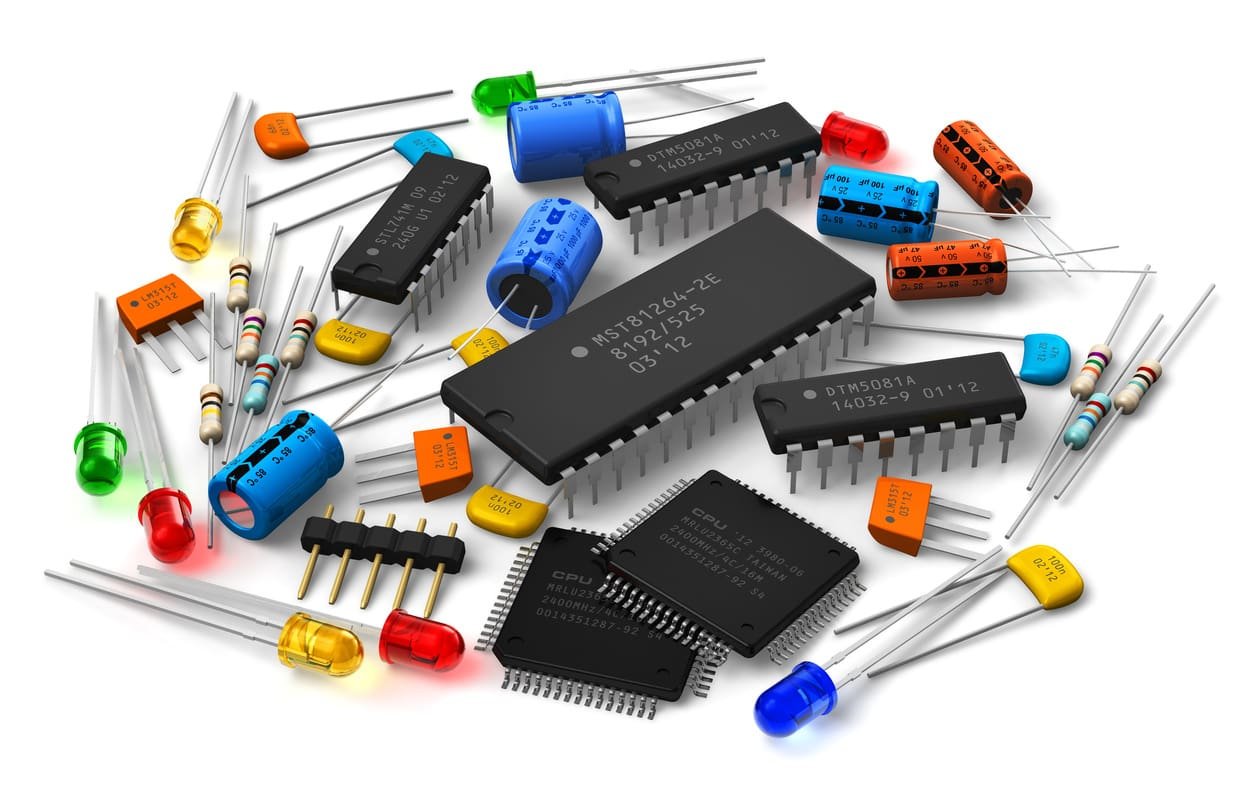
Many people think it’s almost impossible to avoid counterfeit products when shopping in bulk. But this is not entirely true. With the right counterfeit prevention strategies, you can always get authentic components every time.
One effective strategy involves using pre-shipment testing. As the name suggests, you or a third party needs to test the products before shipment. This approach lowers counterfeit risks up to 99.9%.
Additionally, you can consider using X-ray fluorescence (XRF) testing. This allows you to verify the material composition of the electronic components within minutes. With this approach, you can easily spot below-par products.
If you deal with ICs, we recommend decapsulation. This involves opening the parts and then inspecting their internal die using a microscope.
You can’t afford not to perform counterfeit prevention when buying in bulk. According to ECIA, a 2019 capacitor-related scandal cost over $700M across the industry. This loss could have been easily avoided if the right measures were put in place. The right approach involves partnering with independent testing labs, such as SGS.
Using strict quality policies, such as Toyota’s “zero defect” strategy also helps. This involves batch testing critical parts before shipment.
9. Logistics & Duties: Calculating Total Landed Costs
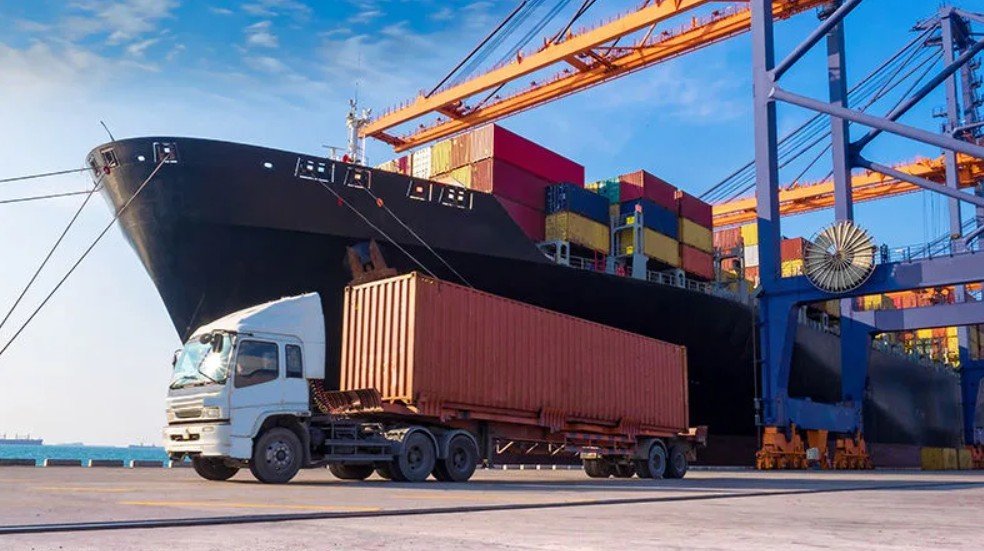
Unexpected expenses can quickly come in if you fail to prepare before importing electronic components. To avoid this, you need to understand how to calculate total landed cost.
To calculate this cost, you need to factor in the following:
● Product price
● Shipping
● Duties
● Other fees
Doing this calculation is essential for many reasons. For instance, a $50,000 capacitor order under free on board can quickly introduce a local charge of $5,000. It may also attract a shipping fee of $1,209 and import duty up to 6.5%. Not factoring in these extra charges upfront can easily affect your business.
With Delivered Duty Paid (DDP), you can always avoid paying for the aforementioned extra charges. The responsibility goes to the supplier. This approach will help simplify delivery, especially if you’re sourcing from the Western world.
10. Future Trends: AI, 5G & Green Electronics Impact

When it comes to future trends, three major factors that matter include:
● AI
● 5G
● Sustainability
Together, these factors will continue to drive strong demand for electronic components worldwide. Industry experts also expect the industry to grow about 25% yearly up until 2030.
This growth is possible, thanks to the introduction of 5G networks. For the networks to deliver perfectly, they need excellent power efficiency and quicker signal transmission. These things will certainly increase demand for advanced electronic components, such as power ICs.
The advancement in AI is also increasing demand for certain components. For instance, AI chips need more power. They also generate heat quickly; this means they need ultra-low ESR capacitors for better performance.
Lastly, sustainability is driving more demand for electronic components. Unlike before, EU regulators and others now mandate RoHS 3.0. As such, more manufacturers are shifting to use safer materials and PCBA components.
Conclusion
One highlight of China’s electronic components wholesale ecosystem is that it offers unmatched pricing. Besides, this ecosystem also supports scalability and buying different varieties of electronic components.
However, for you to get the best results, you must prioritize certified suppliers. Platforms like Alibaba allow buyers to find suppliers that matter. Huntersourcing is another great sourcing agent you can work with when sourcing electronics components in bulk. When you do everything right, you can always secure over 30% cost savings.
Furthermore, you can always stay ahead of competitors by prioritizing sustainability, 5G, and AI-ready components. This priority comes with the following benefits:
● Reduced regulatory risks
● Meet future demand quickly
● Remain competitive
● Offer market-ready components.
Related Post


Get Free Quote

Contact Us Get Free Quote!
* Please kindly fill out the form for inquiry
* we will reply to your inquiry within 24hours