
Refrigerator Manufacturer China: OEM Sourcing & Quality Guide
CHINA REFRIGERATOR SOURCING · MODEL, EVIDENCE & AFTER-SALES
To choose a refrigerator manufacturer in China, first match the supplier to your refrigerator type, destination market and exact electrical model. Household fridge-freezers, commercial kitchen cabinets and display coolers have different duty cycles, documentation and service needs. Compare actual capacity, electrical configuration, test evidence, packing and spare-parts support before placing an OEM order.
HunterSourcing is a China sourcing agent. We help buyers coordinate supplier comparison, samples, agreed factory checks and order follow-up. We are not the refrigerator factory or a certification laboratory. Agree the project scope, deliverables and service fees before commissioning paid work.
Choose your buying route:
- Household fridge / fridge-freezer
- Hotel minibar / compact / wine cabinet
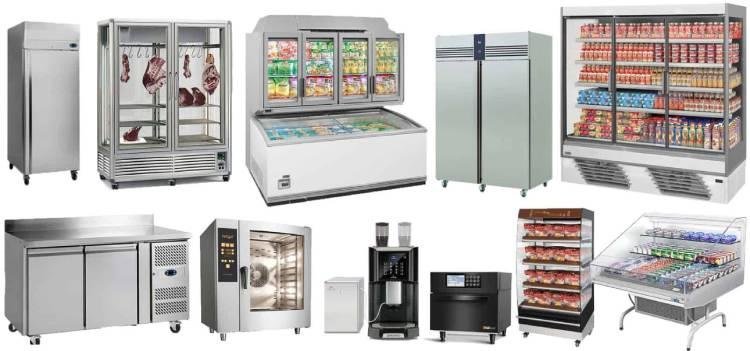
- Commercial kitchen refrigerator
- Retail display cooler / freezer
Compare manufacturer and supply routes · Check the full order cost
Start with the refrigerator type, destination and estimated quantity. If available, add a reference model, target capacity, voltage/frequency and required arrival date. We can clarify the missing specification fields before you commit to bulk production.
Prepared by the HunterSourcing sourcing team. Public supplier references checked 28 October 2026, Beijing time. Supplier figures are attributed examples for enquiry planning, not independently verified factory performance or HunterSourcing quotations.
1. Decide which refrigerator you are buying
Begin with intended use and operating conditions. A cabinet that looks suitable in a photograph may be the wrong product for a hot restaurant kitchen, a quiet guest room or a retail drinks display.
| Product route | Define before searching | Evidence to request |
|---|---|---|
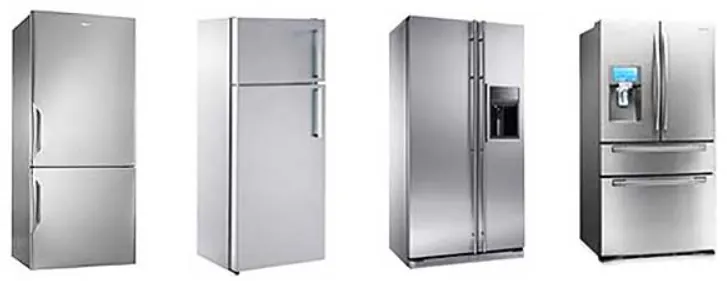
| Household fridge / fridge-freezer | Compartments, usable capacity, door layout, defrost system, noise, electricity supply and intended market. | Exact-model specification, energy information and applicable safety/compliance documentation. |
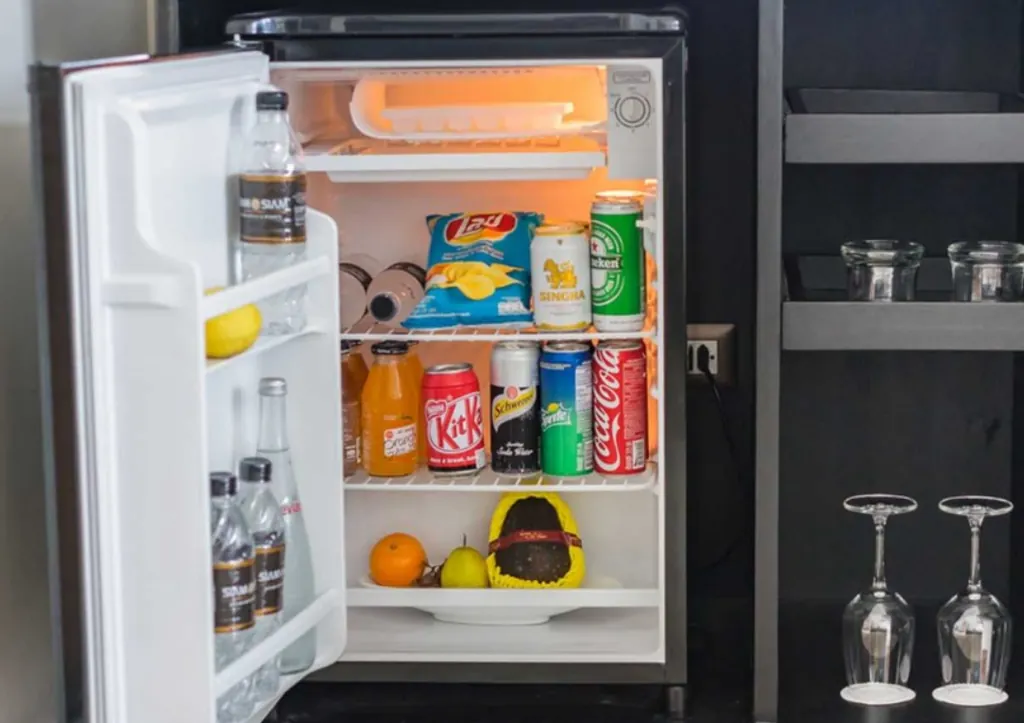
| Compact / minibar / wine cabinet | Cooling technology, ventilation, installation space, intended contents and noise expectations. | Model-specific operating conditions and performance results; a room-temperature demo is not an installation trial. |
| Commercial kitchen refrigerator | Duty cycle, working ambient, loading, temperature recovery, cleanability and local service. | Performance test conditions, component identities, maintenance access and spare-parts list. |
| Retail display cooler / freezer | Door openings, lighting, display layout, condensation control and actual product loading. | Temperature records and applicable energy documentation for the correct commercial category. |

“Fridge” and “refrigerator” do not define the technical product
These names are commonly used for the same appliance. The purchasing specification should instead identify each compartment, temperature purpose, installation and declared capacity. Medical, vaccine and other specialised cold-chain equipment need a separate validated selection process; an ordinary food refrigerator is not automatically suitable.
2. Match the supplier route to the actual programme
A useful refrigerator supplier shortlist matches the product category, actual factory and destination variant. Compare manufacturer capabilities at model level. A recognised brand name does not establish that a particular factory accepts your private-label volume, and a company website does not prove that your order will be produced at the advertised site.
| Reference | What its public page establishes | What remains to verify |
|---|---|---|
| Homa — household refrigerator range | A catalogue organised by household configurations and an ODM cooperation route. | Quoted model, production site in China, minimum per model/finish, electrical variant and current documentation. Do not assume every group factory is in China. |
| Smad — appliance supply and OEM support | Its support page describes OEM and SKD/CKD options, sample enquiries and model-dependent commercial conditions. | Legal seller and actual manufacturing site; sample configuration; whether a smaller trial or mixed-model container is permitted. |
| CORESUN — commercial kitchen refrigeration | A commercial range including upright cabinets, counters, prep units and blast chillers. | Actual model and climate test conditions, documents, component list, local service and commercial terms. A household certificate is not interchangeable. |
| Dixuecold — OEM cabinet programme | A public OEM workflow covering samples, electrical variants, production stages and spares. | Who contracts and manufactures, model-specific scope, written delivery assumptions and replacement-part availability. |
Separate catalogue MOQ, OEM MOQ and development
Container loading is a packing calculation; MOQ is a supplier’s commercial condition. The two may coincide, but loading capacity alone does not establish the minimum order for a model or custom finish.
Smad’s published support terms, checked 28 October 2026, state a normal minimum of one 40HQ container, with smaller quantities possible for some models, and generally 45 working days after print materials are confirmed. These are its published planning terms, not a universal refrigerator lead time. Ask separately for one evaluation sample, a repeatable trial lot and the minimum per model, finish, voltage and logo.
New cabinet tooling, alternative components, testing or registration can add milestones before serial production. Confirm sample timing in the actual offer rather than applying a generic 3–7 day sampling promise. Reserve time for approval revisions, peak-season queues and corrective work.
3. Lock a specification that survives quotation and production
Give each supplier the same version of the RFQ. Changing capacity definitions, electrical variants or packing assumptions can make an apparently cheaper offer incomparable.
| Field | Specify | Confirm with |
|---|---|---|
| Capacity / compartments | Net versus gross declaration, compartment purpose and volume, shelves/drawers and internal clearances. | Current model data sheet and applicable measurement basis; a marketing model name is not a volume measurement. |
| Electrical configuration | Destination supply voltage and frequency, plug/cord, rated input and intended installation. | Nameplate, component configuration and applicable safety-test scope. Changing the plug alone does not change the electrical design. |
| Cooling / refrigerant | Compressor and controls, refrigerant identity/charge, defrost method and required operating conditions. | Component bill of materials, nameplate and documented test conditions. Obtain shipping/handling advice for the actual configuration. |
| Cabinet / materials | External dimensions, door swing, ventilation, finish/colour, internal materials and corrosion requirements. | Drawing, sample, material specification and installation instructions. GSM is not a meaningful universal refrigerator specification. |
| Performance | Cooling and recovery requirements, ambient conditions, load pattern, energy and noise claims. | Exact-model test reports and agreed acceptance criteria; distinguish a short functional check from a full laboratory test. |
| Packing / branding | Carton/crate, protection, pallet options, markings, manual language and barcode/artwork version. | Approved packing sample, packed dimensions, gross weight and loading plan. |
| After-sales / traceability | Serial label, spare parts, manuals, diagnostics, warranty responsibility and claim evidence. | Model-matched service documents and written supply/claim terms, rather than an unsupported global-service promise. |
Read model numbers across every document
Match the quotation, approved sample, nameplate, bill of materials and reports. Check whether a certificate covers the exact variant and applicant, then confirm the issuing body’s verification route. A badge on the supplier homepage is not enough.
Approve an identified sample
Record model, serial or sample ID, voltage/frequency, components, artwork and packing revision. Photograph the nameplate, door seal, controls and supplied accessories.
Control changes after approval
Require written review before replacing the compressor, control board, refrigerant system, power cord, insulation design or production site. A substitution can affect performance, serviceability and the relevance of existing test evidence.
| Supplier example | Supplier-declared figures · checked 28 October 2026 | Interpretation |
|---|---|---|
| Smad upright fridge/freezer combination page | 392L and 300L variants; 220–240V/50Hz; R600a; unit without handle 595 × 662 × 1855mm; carton 643 × 713 × 1948mm; advertised 40HQ loading 72 units. | The linked Smad catalogue page is the source of these figures. Confirm the actual model ID and which values apply to the quoted variant. The two capacities are not a combined 692L single appliance offer, and the loading figure is not a guaranteed order-specific plan. |
| CORESUN CC650A commercial chiller | 480L net; 0 to +8°C; R290; 700 × 828 × 2090mm; published 0.84kWh/24h; climate class 5; advertised 40HQ loading 39 units. | Source: the linked CORESUN CC650A page. Its declared climate class 5 conditions are +40°C ambient and 40% relative humidity. Confirm the underlying report, actual configuration and energy-test basis; catalogue figures are not independent verification or a household-model comparison. |
The examples show why litres alone cannot rank products. Confirm the measurement and test conditions, then verify current destination-specific energy data rather than copying a catalogue’s legacy energy-class shorthand.
4. Build a destination-specific document pack
Refrigerator documents must match the exact model, electrical variant, intended use and destination. Start with the product category and intended country, then agree the applicable route with the importer and a competent laboratory. Household, professional storage and direct-sales refrigeration do not necessarily follow the same requirements.
| Destination / claim | Primary reference | Practical check |
|---|---|---|
| EU household refrigerator | European Commission fridge/freezer guidance and EPREL. | Check the exact product category, current label, product information and model registration responsibilities; match the model ID. Confirm applicable declaration and technical documentation with the responsible supplier. |
| US refrigerator/freezer | DOE certification database and CPSC refrigerator guidance. | Verify the applicable energy reporting and safety requirements. DOE explains that a database listing alone is not a determination of compliance and each importer has certification responsibilities. |
| ENERGY STAR claim | ENERGY STAR partner guidance. | Where the mark is claimed, verify model coverage and the applicable certification route; do not confuse it with all mandatory market-access requirements. |
| Commercial or other destinations | The importer’s category-specific requirements and competent laboratory review. | Confirm electrical safety, performance, labelling and refrigerant-related requirements for the actual country, use and model. |
Check an EU energy record against the actual model
- Confirm which refrigeration product category applies before choosing the database group.
- Use the European Commission’s EPREL guidance and public model database. Search the supplier’s exact model identifier or follow its energy-label QR link, where applicable.
- Compare the supplier name, model identifier, energy label and product information sheet with the quotation and proposed appliance. Save the record link and date checked.
- Ask the responsible supplier or laboratory to resolve missing or conflicting records before committing to the variant. A database record is one part of the document review, not proof of every safety or market-access requirement.
Source: European Commission EPREL guidance, checked 28 October 2026. This is a verification workflow; no specific supplier model is represented here as independently checked or approved.
ISO 9001 describes a management-system scope; it does not prove that a refrigerator model meets every market rule. CE, CB reports, safety marks, RoHS evidence and energy registrations answer different questions. FDA, GMP or OEKO-TEX should not be added as a generic refrigerator certification list. Confirm applicable scope, not the number of logos.
5. Compare total order cost and packed loading
Compare refrigerator offers on the same specification, quantity and delivery basis before comparing totals. Ask for a dated quotation with currency, unit price, quantity tiers, model/variant, packing, delivery term and named location. There is no substantiated universal FOB price in this guide. Request prices for your sample, trial quantity and repeat container on the same specification.
| Item | Confirm on the offer | Decision risk |
|---|---|---|
| Appliance and options | Unit price; tiers; finish; branding; controls; included shelves and accessories. | A low price may describe a smaller or differently equipped model. |
| Development / documentation | Sample and freight fees, tooling, revisions, testing, registration assistance and ownership of files. | Specify who pays, what is delivered and which charges are refundable under written terms. |
| Payment | Contracting entity and beneficiary; T/T or other agreed method; deposit and balance gates. | Smad lists T/T and L/C among options, but no fixed deposit ratio is assumed here. Verify bank changes independently. |
| Packing and logistics | Packed volume/weight, load orientation, pallet choice, actual units/container, route and unloading. | Ask for dated sea/air estimates and separate transit from customs and last-mile time. FCL/LCL choice can change damage and handling exposure. |
| Corrections and release | Inspection, supplier rework, reinspection, rejected goods and authorised partial shipment. | Make the fee and acceptance rules explicit before a problem arises. |
A loading calculation can change the supplier comparison
Illustrative arithmetic, not a freight quote: allocated container transport cost per unit = assumed container charge ÷ actual loaded units. Using a hypothetical US$4,000 charge, US$4,000 ÷ 72 = US$55.56 per unit; US$4,000 ÷ 39 = US$102.56. The capacities above belong to different products and cannot be substituted for each other. The assumed charge is not a sourced market rate. The exercise only shows why actual packed loading matters; it excludes duty, tax, handling and delivery. For a purchasing decision, compare competing offers within the same refrigerator category and equivalent configuration using current freight quotations.
Confirm transport instructions with the manufacturer and carrier, including the actual refrigerant configuration and any handling restrictions. Do not substitute a generic wait time or orientation rule for the model’s installation instructions.
6. Connect the specification to inspection and buyer acceptance
A refrigerator inspection decision needs traceable evidence linked to the approved model and inspected lot. Request the actual records behind a pass/fail decision. An inspector’s short visit does not replace a complete energy, safety or reliability test. Agree the lot, sampling plan, defects and functional checks, together with the factory’s production and laboratory records.
| Gate | Documents / observations | Decision |
|---|---|---|
| Factory and model verification | Seller/factory identity, production route, relevant equipment, model-specific reports and component traceability. | Shortlist, resolve a gap or reject the route. |
| Sample approval | Identified sample, nameplate, drawings, configuration, observed functions and packing. | Approve a controlled version or request changes. |
| Production controls | Relevant factory safety-test records, leak-test records where applicable, component changes and serial traceability. | Review deviations and corrective action; qualified personnel perform electrical and refrigerant-system work. |
| Pre-shipment inspection | Random sample selection; finish/dents; doors/gaskets; accessories; nameplate; agreed functional observations; packing and quantity. | Record findings, limitations, accepted/held quantities and required follow-up. |
| Rectification / closure | Defect photos, supplier action, reinspection evidence and buyer instruction. | Buyer accepts, authorises an identified partial shipment or decides to abandon the goods; record the final closure. |
- Define: product, destination, checks and deliverables.
- Verify: actual factory, model and documentation.
- Approve: sample, configuration and packing.
- Inspect: agreed goods against the approved requirements.
- Resolve: correct and reinspect until the buyer’s final decision is documented.
If only a small part fails and conforming goods can be identified and separated, release that accepted part only on the buyer’s written instruction. Hold the remainder for supplier correction and reinspection as agreed. If most of the lot fails, report the findings, hold shipment and obtain a correction plan before the next inspection. Agree reinspection scope and fees; this is not a promise of unlimited free visits or authority to release goods without the buyer.
Read the report as an evidence chain
Check that the lot or serial reference, sample identity, inspection date, agreed acceptance criteria, observed defects, photographs and correction or reinspection records refer to the same goods. Record any test limitation and the buyer’s final release instruction. A blank report template demonstrates the format; a completed, authorised project report is needed to demonstrate actual work.
Ask to see the reporting format
Our China quality inspection service describes the scope. These Inspection Report PDF and Factory Audit Report PDF are blank templates. They show the format, not completed refrigerator tests or approved factories. Ask whether an authorised redacted project example is available.
7. Agree warranty, spare parts and claim responsibility
A warranty period alone does not establish who pays for repair labour, replacement parts or international freight. Before ordering, obtain written terms for the exact model and destination, including the start date, covered components, exclusions, claim evidence and responsible party.
- Identify parts: request model-matched part numbers, service instructions and the proposed supply route for components such as controls, fans, hinges and door gaskets.
- Separate costs: confirm responsibility for diagnosis, parts, local labour, freight and any agreed credit or replacement.
- Agree the claim path: record the serial number, fault description, photos or diagnostic evidence required, contact point and agreed next steps.
- Confirm availability: obtain written spare-part prices and supply assumptions for the actual order; do not infer availability from a generic warranty statement.
HunterSourcing’s coordination scope and fees must be agreed separately. Supplier manufacturing obligations, laboratory testing and destination-market repair services remain distinct responsibilities.
8. Apply the checks to your buying situation
These are purchasing scenarios, not claimed HunterSourcing customer projects.
A distributor is launching a private-label household range
Choose a small set of models and destination variants first. Compare the model documents, branding, container mix and local spare-parts support. Approve labels and manuals with the importer before printing, rather than treating a logo change as the whole OEM programme.
A hotel or restaurant buyer needs commercial cabinets
Specify working ambient, installation, door openings, stock loading and service access. Ask for the matching climate/performance evidence and repair route. A household energy label or a catalogue temperature range is not a kitchen-duty trial.
An importer is replacing an existing supplier
Map the old model to the proposed configuration, parts and installation footprint. Check whether documentation covers the new factory and variant. Keep serial-level records and an agreed claim process so a lower purchase price does not leave unsupported appliances in the destination market.
Illustrative product imagery retained from the original article; it is not evidence of a HunterSourcing customer installation or factory audit. The following original video explains refrigeration principles, not a supplier’s production quality.
Refrigerator manufacturer China: buyer FAQs
How do I choose a refrigerator manufacturer in China?
Define the product type, destination, capacity, electrical variant, operating conditions and service needs. Verify the legal seller and actual production site, compare model-specific documents and approve an identified sample before bulk production.
How can I compare refrigerator noise before placing a bulk order?
Request measured noise for the exact model and configuration, together with the test method, measurement distance and operating conditions. Evaluate a sample in the intended installation and agree acceptance criteria; a catalogue claim alone does not establish long-term noise performance.
How can I verify that the refrigerator cools reliably in its intended environment?
Ask for model-specific performance records showing ambient conditions, load, measurement points, test method and results. Agree the operating scenario and acceptance criteria before ordering; a brief inspection is not a substitute for a complete laboratory test.
How do I compare refrigerator energy consumption fairly?
Compare the same product category, capacity basis and destination using model-specific figures measured under comparable test conditions. Where an EU energy label applies, check the exact model against its current EPREL record and product information sheet.
What is the MOQ for OEM refrigerators?
MOQ depends on the model, finish, electrical configuration, branding, tooling and container mix. Request separate written terms for an evaluation sample, trial lot and repeat production; a container loading figure does not automatically establish the MOQ.
Can a refrigerator for another market be adapted by changing its plug?
A plug is only one component. Confirm the full voltage and frequency variant, compressor, controls, cord, nameplate and destination documentation. Have the responsible supplier and a qualified testing body assess the exact configuration before ordering.
What should an OEM or ODM refrigerator agreement specify?
Agree the exact model and approved configuration, branding, drawings, tooling ownership, minimum quantities, price validity, change control, documents and after-sales responsibilities. Identify which supplier actually manufactures the goods and what each party delivers.
How can I make sure production matches the approved refrigerator sample?
Record the sample and model identifiers, nameplate, compressor and other critical components, artwork and packaging revision. Require written approval for substitutions, inspect against agreed criteria and retain lot and serial references for traceability.
Who pays for compressor repairs, spare parts and shipping under warranty?
A warranty covering a component does not necessarily include local labour, transport or diagnostic costs. Agree covered parts, exclusions, start date, claim evidence, spare-part availability and the responsibility for each cost in the written contract for your model.
What happens if some refrigerators fail pre-shipment inspection?
Document the defects and identify affected units. Ship a separable accepted portion only with the buyer’s written instruction; hold the remainder for agreed correction and reinspection. If most units fail, hold shipment and record the buyer’s final decision and closure.
Build a model-specific sourcing and evidence plan
Send the refrigerator category, destination, capacity, electrical supply, estimated quantity and required arrival date. Add an existing model or photograph if useful. We can discuss the supplier comparison, sample, document and inspection scope before you commit to production.
Sampling, testing, transport and service charges are confirmed for the actual brief. Discuss confidentiality before sending proprietary drawings or commercial terms.
Tell us about your refrigerator order
Start with: refrigerator type, destination and estimated quantity. Add capacity, reference model, voltage/frequency and required arrival date if known. If you have a supplier, describe the evidence or order issue you need help resolving.
What happens next?
- We clarify the brief and missing model or destination requirements.
- We discuss proposed supplier/sample checks, deliverables, exclusions and the service fee basis.
- You decide whether to proceed before paid samples, factory visits or laboratory work are commissioned.
Contact information is used to respond to this enquiry; see our privacy policy. Ask us to confirm response and project timing.
Related Articles
 Unlocking China’s Fan Manufacturing Excellence
Compare fan sourcing considerations for an electrical-appliance range.
 Succeed with China’s Top Stove Manufacturers
Explore stove supplier selection for kitchen-appliance procurement.
 Sourcing Water Heaters: A Guide to Chinese Manufacturers
Review water-heater manufacturer sourcing and product-selection questions.
Related Post

Furniture is a must for an office or a home. It is available at varying price points as Read more

Wood is extensively used in making furniture around the world. Wood can be molded in any shape or Read more

China offers many types of sofas at an affordable price. When it comes to Chinese Sofa Manufacturer, This Read more
Get Free Quote

Contact Us Get Free Quote!
* Please kindly fill out the form for inquiry
* we will reply to your inquiry within 24hours