
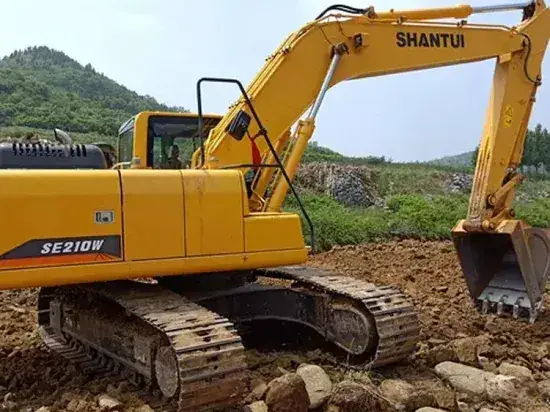
China Excavator Manufacturers: Sourcing Guide for Importers
A China excavator manufacturer should be assessed against your job, destination and support needs. This guide helps you shortlist a machine, compare its delivered cost and agree the evidence needed before shipment.
HunterSourcing is a China sourcing agent. We help buyers research suppliers, compare configurations and quotations, and coordinate agreed factory checks, inspection and shipment. The guide focuses on new machines, with a separate section for used-equipment checks.
Send your destination, work application and quantity. We first clarify the requirement and proposed service scope; any fees are confirmed before chargeable work.
Start with machine width, tail swing, work depth and attachment needs.
Compare the 20–23 tonne examples, then match the engine and export version.
Check configuration consistency, order minimums, spare parts and warranty responsibility.
- 1. Choose an Excavator for Your Job
- 2. Chinese Excavator Brands and Official Model Sources
- 3. Compare MOQ, Quotes and Delivered Costs
- 4. Inspection, Defects and Shipment Release
- 5. Check Import Requirements for Your Destination
- 6. Verify the Supplier, Warranty and Spare Parts
- 7. Understand the Manufacturer and Seller Roles
- 8. Assess the Value of Sourcing from China
- 9. Plan Payment, Lead Times and Logistics
- 10. Buying Scenarios and Electric Options
- 11. Frequently Asked Questions
- 12. How HunterSourcing Can Help Your Project
1. Choose an Excavator for Your Job
Start with the depth, reach, access and working conditions your project needs. Compare models within a suitable weight class; the compact example below serves a different workload from the 20–23 tonne machines.
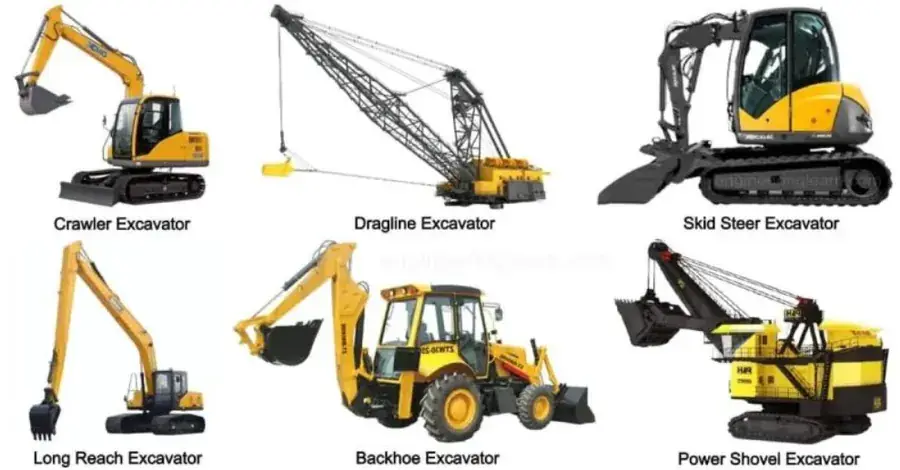
1.1 Compact example: SANY SY75C, US specification
The manufacturer lists the SY75C at 7,280 kg, with a Yanmar 4TNV98C engine and 40.5 kW net power. Its published transport dimensions are 6,121 × 2,220 × 2,720 mm. Use the width and height to plan site access, trailer loading and transport clearance; use the selected attachment specification to establish the bucket and work-tool package.
1.2 Mid-size examples: compare the 20–23 tonne class
| Published model/version | Operating weight | Engine / rated power | Bucket capacity | Emission version shown |
|---|---|---|---|---|
| XCMG XE215C | 21,500 kg | ISUZU CC-6BG1TRP / 128.5 kW | 1.0 m³ | National Stage II |
| Zoomlion ZE215E-10 | 21,500 kg | Cummins QSB7 / 124 kW | 1.0 m³ | EU Stage IIIA |
| LiuGong 922F — Stage V / Tier 4F tab | 22,800 kg | Cummins B6.7 / 116 kW | Standard 1.1 m³ | Stage V / Tier 4F |
Manufacturer publications reviewed 9 November 2026. These entries are a shortlist aid, not identical configurations or a performance ranking. The Stage II and Stage IIIA listings do not establish eligibility for current US/EU import; request a destination-suitable version before comparing final offers.
1.3 Turn a specification into a job-site decision
- Width and tail swing: compare the machine and attachment envelope with gates, trenches and working clearance.
- Bucket and lifting chart: match material, required reach and handling work to the manufacturer limits; a bigger bucket is not automatically the right tool.
- Auxiliary hydraulics: match flow, pressure, pipework and coupler dimensions to the breaker, auger or grapple you intend to use.
- Service access: confirm how filters, fluid checks and diagnostic access will be handled at your site.
2. Chinese Excavator Brands and Official Model Sources
The links below lead to manufacturer model information. For your shortlist, use the current export specification and establish which seller and service provider will be responsible in your market.
- SANY: review the compact-machine example and use the regional dealer route to check service and warranty eligibility.
- LiuGong: select the relevant engine/emission tab on the model page before recording its configuration.
- XCMG: match the offered version to your destination; the same model name may be sold with different regional specifications.
- Zoomlion: distinguish the standard and Pro configurations in the manufacturer brochure and obtain the current order specification.
- Sunward: check compact-machine cab, attachment and parts-support options against the regional publication.
When contacting a seller, ask for the model revision, engine/emission version and local support route together. The examples summarize publicly available manufacturer model and support information.
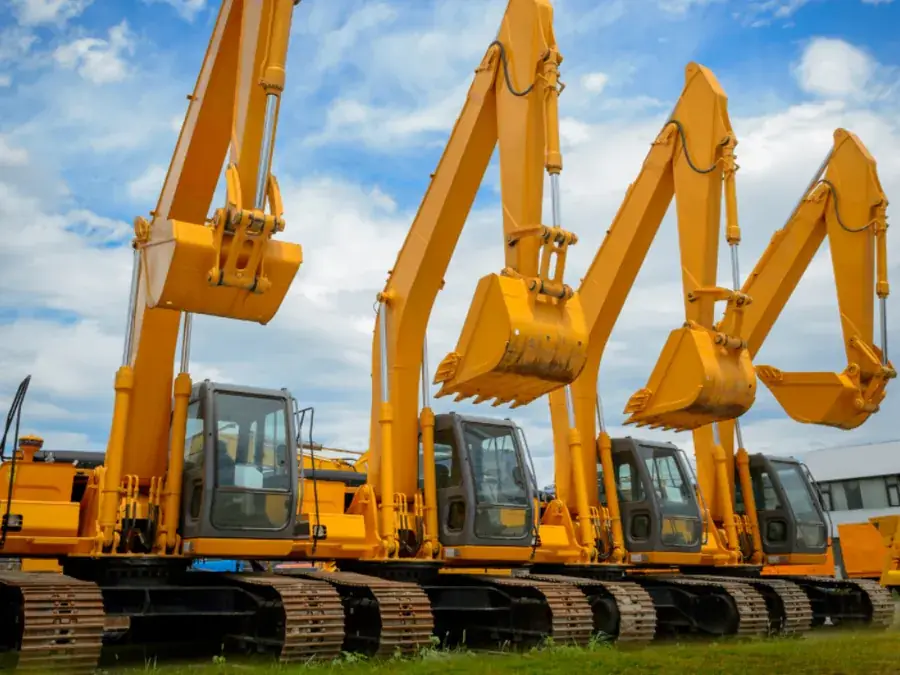
3. Compare MOQ, Quotes and Delivered Costs
Build one RFQ around the exact machine, attachments and destination. Factory prices and minimum quantities depend on that configuration and the order; obtain a dated offer for the machine you want.
- Define the offer: model/version, engine and emission requirements, bucket, work tools, cab options and quantity.
- Record the price basis: currency, named place, Incoterms® version, quote date, validity and included equipment.
- Separate order routes: ask for the minimum quantity for stock, built-to-order and private-label options; compare a trial unit and a repeat order separately.
3.1 Compare the delivered cost without counting charges twice
Comparable delivered acquisition cost = machine and agreed options + costs outside the quoted delivery basis + applicable import charges + final delivery. Mark each item included, excluded or not yet quoted; retain the quote date and currency. A CIF quotation, for example, should not be treated as a complete site-delivered budget.
| Cost group | Evidence / condition to record | Quote status |
|---|---|---|
| Machine and work tools | Configuration schedule, bucket/coupler/auxiliary lines, quantity discount basis | Supplier quote required |
| Inspection and export preparation | Inspection scope, reinspection, packing and load securing | Included / excluded / pending |
| International freight and insurance | Named route/place, coverage, mode and quote validity | Check the Incoterm before adding costs |
| Destination charges | Broker estimate, classification, applicable duties/taxes and terminal charges | Importer/broker confirmation required |
| Inland delivery and unloading | Site access, unloading equipment and carrier scope | Destination service quote required |
For fleet decisions, compare operating costs separately: fuel or charging, scheduled maintenance, wear parts, downtime and resale assumptions over the same working hours. Record the source and working-hour assumption for each input. Our China product sourcing service can include quotation consolidation within the agreed project scope.
3.2 What to request for a usable budget and timeline
Ask the supplier to return a configuration sheet, dated machine/attachment price, quote validity and a milestone schedule. Ask the carrier or broker for the excluded transport and destination charges. That produces an order-specific budget and arrival plan, with the outstanding costs visible before payment.
The downloadable RFQ at the end of this guide gives suppliers the same fields to complete. Current commercial prices, production dates and transit estimates require project-specific quotations.
4. Inspection, Defects and Shipment Release
Agree the inspection scope, test conditions and acceptance criteria before the inspector arrives. A visual check, an ISO 9001 management-system certificate and an engine emission document answer different questions; none substitutes for all the others.
4.1 A practical unit-by-unit inspection plan
| Check | Method to agree | Evidence to retain |
|---|---|---|
| Machine identity and configuration | Match chassis/serial plate, engine plate and attachment list to the contract; prohibit unapproved substitutions | Dated plate photographs, signed configuration and report tied to the unit |
| Start-up and diagnostics | Observe a genuine cold start where practical; record warnings, fault codes and fluid conditions | Start condition, video segment, display/codes and inspector notes |
| Hydraulics and controls | Check boom, arm, bucket, swing, travel and auxiliary functions under manufacturer-approved conditions | Observed leaks, abnormal movements/noise; readings only when suitable instruments and methods are agreed |
| Undercarriage and structure | Inspect tracks, rollers, fasteners, weld condition and visible transport damage | Close-up photographs and defect locations; specialist tests only if commissioned |
| Attachments and safety | Verify coupler locking, pipe routing, guards, labels, manuals and agreed safety features | Compatibility details, identified defects and relevant documentation |
| Dispatch identity | Reconcile inspected serials, attachments and packing list with loading records | Loading photographs and applicable shipping/container identification |
Tests should be performed by competent personnel following the maker instructions and site safety conditions. Use the maker’s operating and test specifications for hydraulic pressures, lifting limits and other acceptance criteria. Record unperformed tests and missing evidence as limitations. Inspection does not replace a destination conformity assessment.
4.2 What happens if an excavator fails inspection?
- Record and report: identify affected serial numbers, defects, evidence and the proposed corrective action; send findings to the buyer.
- Limited defects in a batch: if the buyer expressly authorises a split shipment, release only accepted units and documented acceptable items. Hold the failed units for supplier correction; inspect again after correction.
- Widespread or critical failure: hold shipment, report to the buyer, and request a supplier corrective-action plan before a second inspection.
- Close the inspection task: keep a written record of reinspection and the buyer decision to accept, conditionally accept or reject/abandon the goods. Reinspection costs and commercial remedies follow the agreed contract.
For a one-machine order, a large number of satisfactory checks does not outweigh a critical defect. Safety and compliance failures require resolution before release. Review our China quality inspection service to agree the actual scope and reporting deliverables.
5. Check Import Requirements for Your Destination
Verify the engine, machine configuration and destination requirements before committing to the export version. Certification wording on a marketplace listing is not enough.
| Destination | Pre-order evidence | Official starting point |
|---|---|---|
| United States | Engine family/model-year information, applicable emission certificate/label and the declaration/entry route agreed with the broker | EPA import publications and Form 3520-21 cover nonroad engines, including engines installed in equipment; the importer must establish the applicable requirements and any exception. |
| European Union | Applicable engine type approval, declaration of conformity, CE machinery obligations and instructions for the exact configuration | EU non-road mobile machinery guidance and Regulation (EU) 2023/1230. Establish the applicable machinery regime for the placing-on-market date. |
| Other destinations | Destination emission/safety rules, equipment registration where applicable, documentation and import restrictions | Ask the destination importer and competent authorities for the specific route; do not reuse a US/EU checklist without review. |
EU timing matters: Regulation (EU) 2023/1230 generally applies from 20 January 2027, with specified provisions applying earlier. Orders spanning the transition need a placing-on-market assessment; an order date alone does not determine conformity. A supplier model page labelled National Stage II or EU Stage IIIA does not demonstrate Stage V/Tier 4 Final compliance.
5.1 Additional checks for used excavators
Used equipment requires separate condition and identity due diligence: ownership records, serial/engine plates, service history, hour-meter consistency, repairs and destination eligibility. Confirm any cleaning, inspection or other route-specific requirement with the destination authority and broker. Inspection requirements vary by trade route; establish them with the destination authority and broker before booking shipment.
6. Verify the Supplier, Warranty and Spare Parts
Start with the seller’s legal entity, production role, payment details and destination support. Match the contract party and bank beneficiary, and establish who makes the machine, performs final testing and handles claims.
6.1 Connect the evidence to the machine you will receive
Use one unit record from the signed contract through inspection and dispatch: model/configuration → chassis and engine identification → dated tests/defect record → corrective action → buyer release → packing/loading record. A report for a different serial number is not evidence for your order. For the unit evidence pack, use dated records tied to the ordered serial number.
6.2 Make warranty and spare-parts support usable
| Support term | Get it in writing before payment |
|---|---|
| Coverage | Start event, time and operating-hour limit, covered components and exclusions; confirm territory and export-channel eligibility. |
| Repair responsibility | Who diagnoses, authorises a repair and pays for parts, local labour, travel, freight and import charges. |
| Parts identification | Illustrated parts catalogue, engine/component numbers, maintenance items and who supplies them in your market. |
| Availability | Stock location, quoted lead time for the required part, shipping method and escalation contact; no universal availability promise. |
| Claim evidence | Machine/engine serials, hours, fault codes, photographs, maintenance records and agreed response/escalation procedure. |
Ask a local service provider whether it can work on the proposed engine and hydraulic controls before buying. A familiar engine brand does not prove that every filter, electronic module or final drive is locally interchangeable.
7. Understand the Manufacturer and Seller Roles
The seller’s production role determines which questions to ask and which company should be named in the contract.
- Brand OEM: ask about the exact production/export version, territorial support and the seller’s authority to supply it.
- Assembler: establish the engine/hydraulic component sources, who controls assembly and testing, and who carries warranty responsibility.
- Exporter or trader: identify the actual manufacturer for every model and agree responsibility for documents, inspection findings and claims.
8. Assess the Value of Sourcing from China
China is worth evaluating when a machine’s configuration, complete delivered cost and support route fit your fleet.
- Configuration choice: compare the published machine range and available export versions against the job.
- Acquisition cost: use the same attachments, delivery basis and cost fields for every quotation.
- Uptime and ownership: include service access, parts, maintenance and resale assumptions in the decision.
9. Plan Payment, Lead Times and Logistics
Build the timeline from your in-hand date. Configuration approval, production, pre-shipment inspection, export documentation and transport are separate stages; a production quote that starts after configuration approval does not include the preceding weeks.
| Stage | Ask for in the quotation | Decision supported |
|---|---|---|
| Brief and supplier selection | Model, weight class, engine tier, attachments, destination and quantity | Which candidates merit a formal quote |
| Configuration and documents | Signed specification, emission and export documents and approval dates | Is the exact machine and compliance route agreed |
| Production | Whether a machine is built to order or from stock, and the build window | What dates are committed in writing |
| Pre-shipment inspection | Inspection checklist, report timing and reinspection cost | What evidence supports release |
| Shipping and delivery | RoRo, container or breakbulk; route, named place, duties and exclusions | Can the machine follow the agreed route |
Work backward from the required arrival date: configuration approval → production or stock verification → inspection and any correction → dispatch → transit → clearance and site delivery. Get the dates, starting conditions and responsibilities in writing; a production lead time is not a door-to-door delivery time.
Agree deposit, balance and release conditions with the contracting supplier. A route-specific logistics plan should identify packing, load securing, documents and delivery costs outside the supplier’s quote.
10. Buying Scenarios and Electric Options
These are illustrative planning routes, not completed HunterSourcing customer cases.
10.1 Contractor buying one 20-tonne crawler
Freeze the engine tier, bucket and quick coupler, then compare delivered cost and the nearest parts and service path. Confirm the emission documents before payment and inspect the machine before it leaves China.
10.2 Distributor ordering mini excavators
Compare batch pricing by model and attachment, and confirm each machine emission and labelling route for the destination. A per-unit saving can be erased by warranty and parts issues, so lock those terms in writing.
10.3 Mining company sourcing a large machine
Request the exact engine and hydraulic package, operating weight, bucket capacity and transport plan. Pre-shipment inspection and emission documentation become more important as the machine and its downtime cost grow.
10.4 Electric option: check the work cycle before requesting a quote
Where an electric machine is being considered, send shift duration, work intensity, charging availability and site supply to the manufacturer. Ask for the relevant duty-cycle assumptions, charger compatibility, battery warranty and battery-service route; do not infer a full shift from a promotional runtime figure.
11. Frequently Asked Questions
These questions cover the decisions buyers commonly need to resolve before ordering: choosing a machine, comparing costs, verifying the unit and arranging support.
11.1 Which Chinese excavator brand should I shortlist for my job?
Compare official model specifications for the required work envelope and the export version available to your destination. Then verify the seller, local service, parts and warranty eligibility. Brand size or a low listing price alone cannot establish suitability.
11.2 Can I buy one machine, or is there a minimum batch?
Ask separately about a stock unit, a built-to-order machine and a private-label batch. Obtain the minimum quantity and specification in a dated written offer before treating a listing as a single-unit quotation.
11.3 How do I compare prices without missing delivery costs?
Use the same engine/emission version, attachments and quantity, record the Incoterm and named place, then add only excluded freight, insurance, destination charges and final delivery. Get duty and entry estimates from the destination broker; a CIF offer is not automatically a site-delivered price.
11.4 How can I reduce the risk of buying a different or misrepresented machine?
Connect the business licence, contracting seller and bank beneficiary. Require dated unit/engine plate evidence, a signed configuration, inspection against that unit and matching dispatch records. For used equipment add ownership, repair and hours-history checks; a catalogue or a fresh paint finish is insufficient.
11.5 What proves that the engine is suitable for US or EU import?
Obtain engine family/model-year and label details and the relevant certificate or type approval, then have the importer establish the declaration and entry route. EPA Form 3520-21 concerns US nonroad-engine imports, including installed engines; EU engine and machinery obligations are separate. Generic CE/EPA wording cannot verify the specific unit.
11.6 What if the machine leaks or has uneven hydraulic movements at inspection?
Record the defect and test conditions, stop release where warranted, obtain supplier correction and reinspect against agreed manufacturer-based criteria. A critical failure is not outweighed by unrelated passed checks. The buyer must approve any conditional acceptance or split shipment in writing.
11.7 Will I be able to obtain spare parts after importing?
Verify exact engine, pump, valve, controller and wear-part identifiers, the parts catalogue and a supplier/service route in your country. Ask for a dated stock/lead-time statement for important parts. Shared brand names do not ensure that region-specific components are interchangeable.
11.8 Will a factory warranty pay for repairs in my country?
Only the agreed terms establish that. Confirm territory, export-channel eligibility, coverage, time/hour limits and who pays labour, diagnosis, freight and taxes. Identify the claims contact and evidence required before payment; do not assume an overseas dealer must honour a grey-market purchase.
11.9 Should I use a container, RoRo or another shipping method?
Have the carrier plan from the actual transport dimensions, weight, attachments and destination. Obtain a loading/securing plan and responsibility for dismantling and reassembly if required. Compare the full delivery scope rather than selecting a method from tonnage alone.
11.10 What will HunterSourcing need to prepare a sourcing discussion?
Start with your email, destination, work application or preferred tonnage, and quantity. Add attachments, budget and arrival date if known; phone is optional. We first clarify the requirement and the proposed service scope. Manufacturer quotations, service fees and specialist checks are confirmed for the project.
Discussion examples: buying and parts concerns, shipping and destination charges, and an owner review covering maintenance and parts. Personal experiences help identify questions; technical and import statements above use manufacturer and official sources. Reviewed 9 November 2026.
12. How HunterSourcing Can Help Your Project
Choose the support that fits your buying stage. HunterSourcing can coordinate the agreed work and keep the supplier evidence and decisions organised for your project.
| Your buying stage | Support to agree | Useful deliverable |
|---|---|---|
| You already have a supplier | Review seller identity, machine configuration and the checks required before payment | An evidence-gap list and agreed factory/inspection scope |
| You are comparing offers | Put supplier quotations on the same configuration and cost basis | A comparison with inclusions, exclusions and unanswered questions |
| Inspection has found problems | Document findings, coordinate supplier correction and arrange agreed reinspection | A unit-linked defect record, reinspection findings and buyer release decision |
Supplier research, visits, inspection, specialist tests, reinspection and freight are separately scoped unless expressly included. We confirm the work, fees and responsibilities before chargeable services start.
Download the blank excavator RFQ and quote-comparison worksheet (CSV). Use it to collect like-for-like offers. It is a planning worksheet, not a quotation or completed report.
Share the destination, intended work and quantity below. If you have not chosen a model, describe the job. We will first review the requirement and confirm the next step.
12.1 Tell Us About Your Excavator Project
Email, destination, application or tonnage, and quantity are enough to begin. Phone and budget are optional.
Our site uses a 24-hour reply target. Read our privacy policy before sending project details, or email info@huntersourcing.com.
Prepared by Lancy Won. Manufacturer specifications and official import references reviewed 9 November 2026. Confirm the current configuration and commercial terms for your order.
Related Articles
Related Post

Furniture is a must for an office or a home. It is available at varying price points as Read more

Wood is extensively used in making furniture around the world. Wood can be molded in any shape or Read more

China offers many types of sofas at an affordable price. When it comes to Chinese Sofa Manufacturer, This Read more
Get Free Quote

Contact Us Get Free Quote!
* Please kindly fill out the form for inquiry
* we will reply to your inquiry within 24hours