
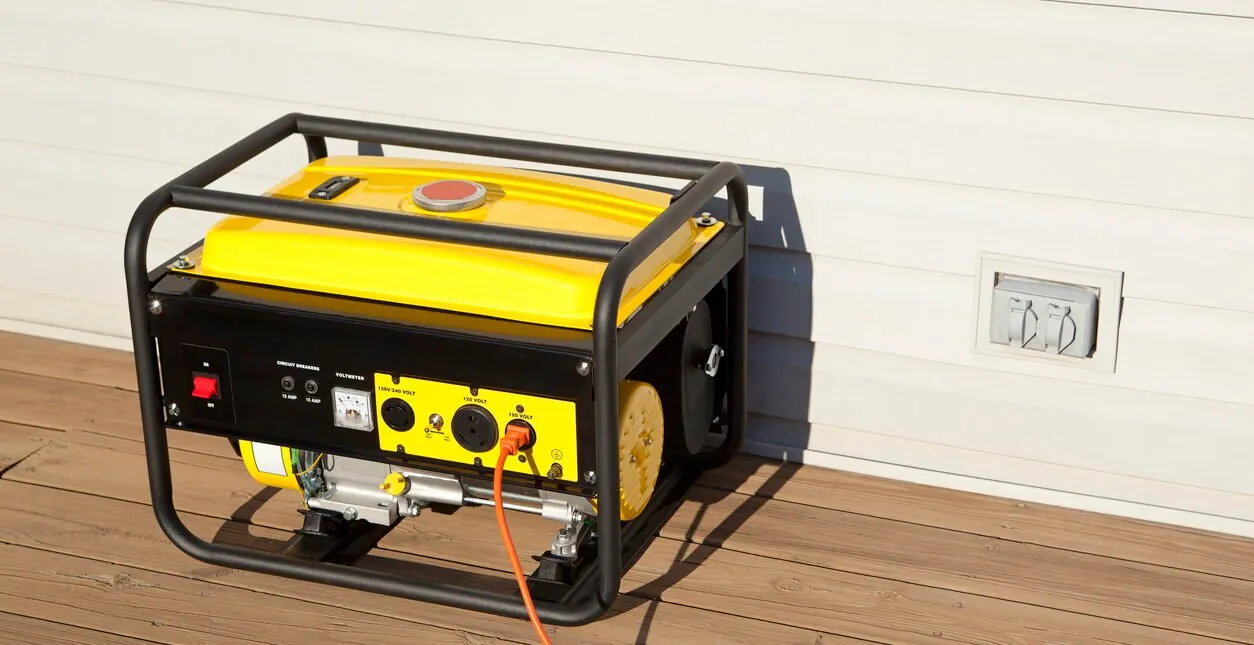
Generator Manufacturers in China: Specs, Factory Checks & Buying Guide
Choosing a generator manufacturer in China starts with the load, destination and operating duty—not the largest number on a canopy. This guide compares three published 100kVA-prime configurations and shows what to verify before approving a sample, paying a deposit or releasing a shipment.
HunterSourcing is a China sourcing agent, not the factory making these generators. We can help research suppliers, compare offers and coordinate agreed verification, inspection and shipment. The manufacturer examples below summarize supplier-published specifications, materials, dimensions and available model information.
Send your destination, application, electrical requirements and quantity. We first clarify the requirement and scope; fees and third-party charges are agreed before chargeable work.
1. Choose the Generator Type and Operating Duty
Fuel type, output technology and application are different decisions. “Diesel” describes fuel/engine type; “inverter” describes output architecture. A portable retail unit, a packaged industrial genset and a battery power station should not be compared as if they were the same product.
| Buying route | Factory questions | Evidence to request |
|---|---|---|
| Portable / reseller range | Fuel, continuous versus starting output, sockets, portability, local servicing | Exact regional model, manual, labels, operating limits and destination requirements |
| Industrial diesel / commercial backup | Prime or standby duty, load steps, motor starting, ATS and site conditions | Sizing calculation, signed configuration, rated performance and agreed test procedure |
| Off-grid / pump / hybrid project | Operating schedule, charging or pump characteristics, remote starting and maintenance access | Application-specific engineering review, controls/interface description and service plan |
1.1 Separate kW, kVA, prime and standby
kW = kVA × power factor. At PF 0.8, 100kVA corresponds to 80kW; 110kVA corresponds to 88kW. PF is not engine efficiency. These calculations do not establish motor-start capability, and both the set’s kW and kVA limits matter. Cat’s conversion tool requires the power factor for that conversion.
Cummins’ application manual distinguishes backup standby duty from variable-load prime duty and applies duty-specific conditions. Do not extend one manufacturer’s hours/load limits to another assembler. Ask for the offered set’s precise rating definition, site derating and permitted load profile; unlimited annual prime hours does not mean continuous full-nameplate loading.
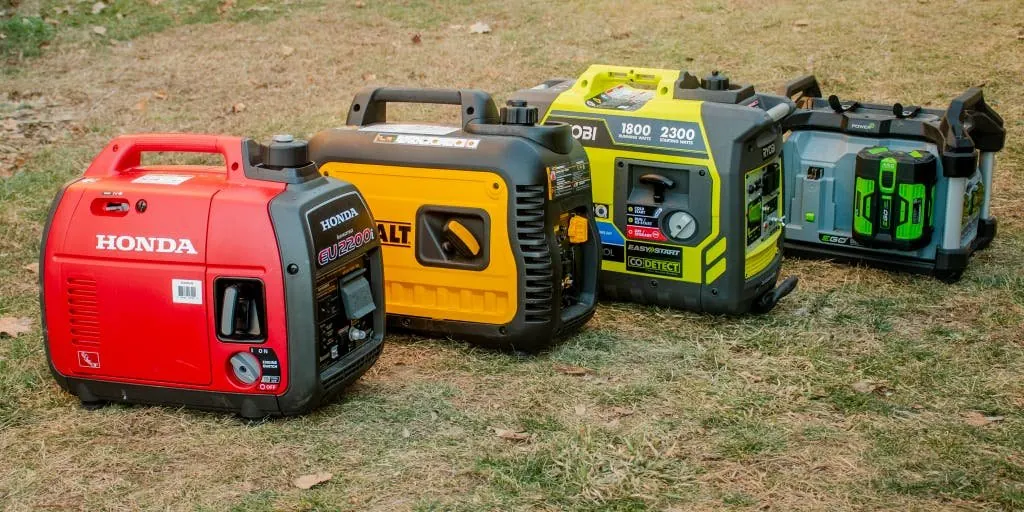
For sizing, provide running loads, equipment nameplates, motor starting method/data, starting sequence, acceptable voltage/frequency dip, altitude and ambient temperature. Have the responsible supplier engineer confirm a suitable model and test basis.
Third-party background video illustrating the equipment or process discussed in this section.
2. Compare Published China Generator Manufacturer Configurations
The following examples share 50Hz, three-phase, 100kVA/80kW prime and 110kVA/88kW standby ratings. They are research starting points, not a ranked “best factories” list, approved suppliers or interchangeable offers. Check the linked model-specific sheets and obtain the final signed configuration.
| Manufacturer / configuration | Published electrical rating | Engine / alternator | Published size and mass |
|---|---|---|---|
| AGG CU110D5 — datasheet | 50Hz; 400/230V standard; prime 100kVA/80kW; standby 110kVA/88kW | Cummins 6BT5.9-G2, 1500rpm; brushless alternator, exact make/model unspecified | Open 2150 × 950 × 1523mm, 1180kg; silent 2968 × 1054 × 1250mm, 1460kg; weight basis unstated |
| Dingbo DB-80GF — cited Cummins configuration | 50Hz; 400/230V; prime 100kVA/80kW; standby 110kVA/88kW | Cummins 4BTA3.9-G13, 1500rpm; GR225H with supplier wording requiring clarification | Open 2270 × 800 × 1450mm, 1030kg; canopy 2720 × 1100 × 1815mm, 1300kg; weight basis unstated |
| Hosem A-C110 — soundproof configuration PDF | 50Hz; 400/230V; prime 100kVA/80kW; standby 110kVA/88kW | Cummins 6BT5.9G2, 1500rpm; Hosem ASF274C; Smartgen HGM6120N | Soundproof 2900 × 1080 × 1500mm; empty weight 1700kg |
Dimensions are length × width × height. Different enclosures and mass labels prevent a direct packaging comparison. The figures summarize supplier-published information reviewed on 9 November 2026; confirm availability, the current offer, component origin and destination requirements for the selected configuration.
2.1 Resolve catalogue discrepancies before sample approval
- AGG: CU110D5 is the 100kVA-prime example. CU100D5 is a different model with 90kVA prime / 100kVA standby. The CU110D5 sheet labels its standby column “EPS” but describes ESP below; clarify the signed rating label.
- Dingbo: the cited sheet uses both “Shanghai Stamford” and “copy Stamford” for GR225H. Do not read that as proof of a genuine STAMFORD alternator. Obtain the actual manufacturer, model, serial evidence and corrected specification. DB-80GF also appears on other engine configurations.
- Hosem: the product page lists a 550L tank while its linked soundproof PDF lists 188L. Engine naming and prime-duty wording also differ across the page. Confirm the exact engine, usable tank, duty definition and packing mass in writing.
A manufacturer’s useful selling points are demonstrated by a clear configuration, traceable components, test records and support commitments. Product photos, brand names and a broad ISO claim do not prove those points for your order.
3. Build One Specification and Request Comparable Quotations
| RFQ field | What every supplier should return | Buyer decision |
|---|---|---|
| Electrical output | Prime and standby kVA/kW; PF; Hz; voltage; phase; site-rating conditions | Same duty and electrical configuration across offers |
| Engine / alternator / control | Exact make/model, revision, serial traceability and permitted substitutions | What is actually supplied and supported |
| Enclosure / physical scope | Open or canopy; materials/finish, colour, dimensions, lifting points, access and noise test basis | Installation, corrosion exposure, handling and service access |
| Fuel / operating data | Fuel consumption at agreed load points; units/test conditions; usable tank capacity | Operating cost and runtime under a comparable load profile |
| Controls / accessories | Starting battery, charger, ATS, breaker, monitoring, heater and other agreed items | Included versus separately priced scope |
| Packing / labels / manuals | Export packing, gross mass, centre of gravity, markings, language and document pack | Transport preparation and destination use |
| Acceptance | Document review, witness points, tests, records and defect disposition | What must pass before buyer release |
Ask for fuel figures at the same specified load points—for example 25%, 50%, 75% and 100% of the agreed rating—where the manufacturer supports those tests. These are proposed comparison points, not measured results or a claim that every unit is intended to operate at all of them indefinitely.
3.1 Compare operating cost using disclosed assumptions
Fuel cost per operating hour = stated fuel use in litres/hour × the buyer’s local fuel price. Calculate runtime from usable fuel capacity and consumption at the defined load, not tank size alone. Keep the load profile, test conditions, auxiliary use and maintenance assumptions beside the calculation. A headline “hours per tank” figure is insufficient for a fair comparison.
4. Compare MOQ, Price, Lead Time and Landed Cost
No reliable, dated, configuration-specific firm price or MOQ was established for the three examples. Request a written quote rather than using an unrelated marketplace price as a China export price range.
| Commercial field | Compare on the same basis | Condition to agree |
|---|---|---|
| MOQ / sample quantity | Minimum by model/configuration and private-label scope; trial-unit and mixed-order options | A sample is not automatically exempt from component or branding minimums |
| Unit price / tiers | Currency, selected configuration, quantity breaks, quote date/validity | State FOB named port or another agreed Incoterms® term; list exclusions |
| Sample / customization | Sample unit, logo/artwork, tooling, testing and documentation charges | Specify refundable/non-refundable items and ownership |
| Production lead time | Order-specific milestone dates after agreed payment, specification and artwork approval | Separate production, inspection/correction and dispatch from transit |
| Payment | T/T or agreed method, deposit amount, balance trigger and beneficiary | Verify the contracting seller/payment relationship; release against agreed evidence |
| Logistics / import | Packed mass/dimensions, FCL or LCL suitability, route, cargo cover, broker charges and delivery | Freight and duties require route- and classification-specific quotation |
Hosem’s A-C110 page displays “35days”, but without a dated validity or clear starting condition. Treat this as an undated supplier indication requiring a current written schedule—not guaranteed delivered lead time. The other accepted sheets do not establish a numeric production period.
Landed cost per accepted unit = attributable order costs ÷ accepted saleable quantity. Add only costs excluded from the quoted term, including agreed inspection, freight/insurance, broker-confirmed duties/taxes, terminal costs and delivery. Quote air versus sea transport only after checking actual packed dimensions, fluids/batteries and carrier rules. FBA preparation, if relevant to a reseller, requires a separate destination and product-acceptance review.
Third-party background video. This original clip discusses China-to-India import costs; its rates and procedures are not a quotation or current guidance for another destination.
5. Verify Destination Documents and Supplier Identity
First identify the manufacturer/site, contracting seller, exporter and payment beneficiary, and document their relationship if they differ. Independently confirm any bank-detail changes through an established company contact. Then match product documents to the exact engine, set model and order revision.
| Evidence | Verification question | Limit |
|---|---|---|
| Business and manufacturing identity | Does the legal entity/site match the seller’s claimed role and production scope? | A trading company may be involved; record responsibility rather than infer it from photos |
| US emissions / import route | EPA guidance covers generators among nonroad-engine imports. Confirm engine classification, applicable certification/label and declaration route with the responsible importer. | A generic “EPA certificate” or CE logo alone does not establish import eligibility |
| EU conformity | EU guidance explains applicable legislation, conformity assessment, technical documentation and EU declaration of conformity. Match scope and model. | CE is not a universal third-party approval certificate; own-brand buyers may take manufacturer responsibilities |
| Quality-management certificate | If ISO 9001 is claimed, verify issuer, entity, site, scope and validity | Management-system certification is not proof of output, emissions or your lot’s quality |
| Shipment documents | Invoice, packing list, transport document and agreed origin/insurance documents | Use consistent model/quantity/weights; broker verifies classification and current duty treatment |
Do not apply GMP, OEKO-TEX, FDA, CE, RoHS or a safety-data sheet to every generator as a standard checklist. Product configuration, engine/use classification, destination and shipment date determine what applies. This guide does not provide a complete legal approval or a fixed tariff rate.

Portable-generator safety: CPSC guidance calls for outdoor operation at least 20 feet from buildings with exhaust directed away from openings, and never inside enclosed spaces even with doors open. This portable-use advice does not replace an engineered stationary installation plan. Electrical connection, transfer equipment and commissioning belong with competent professionals.
6. Agree Factory Tests, Inspection and Shipment Release
Make acceptance evidence part of the order. A factory visit or inspection is valuable only when its scope, limitations, findings and corrective action are recorded against the contracted configuration.
- 1 — Verify and freeze: record legal identity, manufacturing scope, signed specifications, approved sample/reference configuration, engine/alternator/controller identity and change-control rules.
- 2 — Inspect production: check component identification, workmanship, wiring, guards, labels, assembly and agreed dimensions. Record serial/batch references, photographs and open issues.
- 3 — Witness agreed tests: the responsible engineer defines load stages/duration, instruments, voltage/frequency limits, transient and protection checks, and ATS/start functions where included. Record test conditions, results, failures and retests by serial number.
- 4 — Assess the lot: agree sampling/AQL, defect definitions and coverage where suitable. Sampling does not replace agreed functional/safety checks or prove every unit passes. A no-load run is not equivalent to the agreed load-bank programme.
- 5 — Close or correct: reconcile defects and records, obtain the buyer’s written disposition, then check packing and release documents. Shipment authority remains with the buyer under the contract.
6.1 If inspection fails, keep the buyer’s decision visible
| Finding | Action and shipment control | Close-out record |
|---|---|---|
| A limited number fails; most units meet agreed criteria | Identify and segregate failures. The buyer may authorize shipment of accepted units if lawful and consistent with the contract. Supplier corrects rejected units; reinspect before further release. | Accepted serials/quantities, withheld units, written buyer authorization and correction/reinspection results |
| Widespread, critical or unresolved failure | Hold affected goods; report to buyer. Supplier implements agreed corrective action; conduct a second inspection and repeat checks as needed. | Failure evidence, agreed cause/action, retest results and buyer acceptance or rejection |
| Buyer declines after review | Record the buyer’s decision and the contract-based remedy; do not infer permission to ship | Final acceptance/rejection and outstanding responsibilities |
The commissioned inspection task closes when the buyer accepts the agreed goods or decides to reject/abandon the order and the close-out is documented. Reinspection, laboratory work and additional visits may be separately chargeable; agree this before work. The workflow outlines the scope, records and buyer decisions to agree for a generator-inspection assignment.
Third-party background video illustrating the equipment or process discussed in this section.
7. Plan Spares, Warranty, Packing and Delivery
Ask the factory to show how support will work at the destination, not merely state a warranty duration. Compare component availability and local service capability alongside the purchase price.
| Before payment | At a fault or claim | Before closure |
|---|---|---|
| Illustrated parts list, consumables, initial spares, engine/alternator/control references and model revisions | Serial/batch, symptoms, operating hours, maintenance record and supplier-requested evidence | Written diagnosis, approved compatible parts or other remedy, responsibility and buyer confirmation |
| Written warranty: start event, covered duty, territory, exclusions and response/escalation route | Confirm who pays parts, labour, freight, tax and any return transport | Dispatch date, tracking and a remedy if parts are unavailable |
| Packing drawing, gross mass, lifting/handling instructions and agreed fluid/battery condition | Resolve carrier restrictions and any transport damage with recorded evidence | Matched invoice/packing list, carrier documents, buyer-authorized dispatch and receipt record |
The production completion date is not a delivered date. Build separate milestones for inspection/correction, packing, dispatch, transit, customs and final delivery. Supplier manuals govern maintenance and storage intervals; a forum oil-change recommendation is not the selected engine’s service schedule.
8. Three Buying Scenarios and the Next Decision
These are illustrative procurement scenarios, not HunterSourcing client cases or performance results.
| Scenario | Buyer risk | Next useful evidence |
|---|---|---|
| Distributor launching a private-label range | Similar housings conceal different regional ratings or components | Select a regional model, freeze BOM/labels, approve the sample and agree warranty/spare references |
| Factory buying emergency backup | A headline kVA figure misses motor-start demands, ATS scope or site derating | Provide a load/start sequence; obtain engineering selection and an acceptance test with the required controls |
| Remote pump or hybrid project | Long operating duty, fuel logistics and servicing differ from occasional backup | Confirm prime-duty conditions, operating profile, consumption basis, remote-control interface and maintenance access |
If you already have a candidate supplier, bring its offer and model sheet. The next step can be a structured comparison and verification plan rather than another broad supplier search.
Third-party background video illustrating the equipment or process discussed in this section.
9. Generator Manufacturer FAQ
These ten questions reflect accessible buyer/owner discussions and procurement decisions. They are not a measured cross-platform popularity ranking. Discussion accounts identify concerns; the answers use manufacturer and official references for the technical and document checks.
9.1 Do I need a prime-duty or standby generator?
Choose by the actual operating schedule and load profile. Ask for the model-specific rating definition, site conditions, permitted average load and warranty eligibility. A diesel label alone does not establish prime duty, and a standby rating is not a portable unit’s brief starting-output claim.
9.2 What information does the factory need to size a generator for pumps or motors?
Provide running loads, nameplate information, voltage, phase, motor starting data/method, load sequence, site conditions and acceptable transient performance. Have the responsible supplier engineer provide written selection and an acceptance-test basis. Do not select a set using a universal starting-watt multiplier.
9.3 Can a 60Hz model be supplied as 50Hz with my required voltage?
Obtain a configuration-specific manufacturer offer for the required frequency, voltage, phase and output rating. Verify nameplates and test readings. Do not assume an existing 60Hz unit can safely be converted by an informal adjustment; the manufacturer must approve the complete configuration.
9.4 Should I choose diesel or an inverter generator?
Fuel and output architecture describe different characteristics. Compare actual models for operating duty, loads or charger compatibility, noise under stated test conditions, fuel logistics, maintenance and service support. Neither term alone proves suitability or a universal efficiency advantage.
9.5 How do I compare fuel consumption and runtime?
Use the same agreed load points, units, fuel and test conditions. Request usable fuel capacity and the basis for any runtime claim. Calculate fuel cost using your local price and operating profile; tank size or an unspecified hours-per-tank headline is not a fair cost comparison.
9.6 What maintenance should I plan for long-idle or remote operation?
Obtain the exact engine and genset manuals, hour/calendar intervals, storage instructions, consumables and service-access requirements. Confirm available skills and the records needed for warranty. Budget maintenance downtime; do not replace the manufacturer’s schedule with owner anecdotes.
9.7 How do I prevent engine, alternator or controller substitutions?
Freeze the make/model and revision of agreed components, the reference sample/configuration and traceability requirements. Require prior written buyer approval for substitutions and compare production against that record. Similar housings or the same sales-model name do not prove identical internal parts.
9.8 Which emissions and conformity documents should I request?
Establish destination, intended use and engine/product classification first. Match applicable documents and labels to the exact engine family, model and configuration with the responsible importer and qualified advisers. Generic EPA or CE claims do not establish every destination requirement; own-brand purchasing can add manufacturer responsibilities.
9.9 Is a running video enough to accept the generator before shipment?
A no-load running video does not replace an agreed load and functional test. Require a serial-linked record of the engineer-defined load stages, duration, conditions, instruments, limits and protection/transfer checks where included. Record failures, corrections and retests before the buyer authorizes release.
9.10 How do I make spare parts and warranty support usable?
Request model-specific part references, initial spares, stock/service location, diagnostic support and written coverage for the intended duty. Agree response/escalation, parts and labour responsibility, freight/import charges and a remedy when parts are unavailable. A warranty duration alone does not guarantee local parts stock.
Examples of original discussions: long-running pump duty, unusual voltage/frequency needs, business buyers asking about parts support. These self-reported questions illustrate buyer concerns for further investigation.
10. Start Your Generator Sourcing Project
Share your destination, intended duty/application, voltage/frequency/phase, quantity and any load list or supplier offer. A target budget helps compare routes, but the specification and acceptance conditions must come first.
- Before supplier comparison: agree the research scope, specification and deliverables; identify what needs engineer, laboratory or importer confirmation.
- Before a trial unit: confirm sample configuration, fees, transport, checks, approval owner and the consequence of failure.
- Before bulk production: sign the configuration/change rules, commercial milestones, document requirements and acceptance plan.
- Before shipment: reconcile findings, correction/reinspection and the buyer’s written release decision.
Our role can include China sourcing coordination, quality inspection coordination and freight coordination within an agreed project. Scope, service charges and third-party expenses must be confirmed; this is not a promise of included certification or guaranteed model approval.
Download the blank generator RFQ and supplier-comparison worksheet (CSV). This is an unfilled planning template, not a quotation, certificate or completed inspection report.
Tell Us About Your Generator Requirements
Include destination, application, quantity and the electrical specification in your message. An existing model sheet or quotation can be discussed in follow-up.
Your information is used to respond to this enquiry; see the privacy policy. You can also email info@huntersourcing.com. Response timing and service scope are confirmed during contact.
Prepared by Lancy Won for HunterSourcing. Public manufacturer and official information reviewed 9 November 2026. This purchasing guide combines supplier-published specifications, official references and procurement checks; agree any engineering, testing, factory-review or conformity work with the appropriate specialist for your project.
Related Articles
Compare solar-panel supplier evidence, model specifications and sourcing decisions for a power-equipment project.
Explore battery manufacturers and the supplier questions behind an energy-storage sourcing brief.
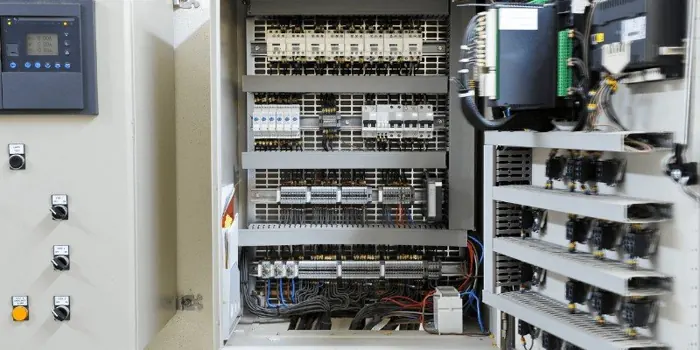
Review control-panel sourcing considerations when defining generator controls and electrical-system scope.
Related Post

China has been the number one producer of all types of products and sending them to all other Read more

Smartphones are now part of our day-to-day life. Manufacturers equip them with strong operating systems such as iOS, Read more

[fusion_builder_container type="flex" hundred_percent="no" equal_height_columns="no" menu_anchor="" hide_on_mobile="small-visibility,medium-visibility,large-visibility" class="" id="" background_color="" background_image="" background_position="center center" background_repeat="no-repeat" fade="no" background_parallax="none" parallax_speed="0.3" video_mp4="" video_webm="" Read more
Get Free Quote

Contact Us Get Free Quote!
* Please kindly fill out the form for inquiry
* we will reply to your inquiry within 24hours