

Picture Frames Manufacturer in China: Wholesale & OEM Guide
Choosing a picture frames manufacturer in China starts with a complete frame specification and a packed sample—not just a product photograph. Compare the opening size, usable rabbet depth, moulding material, glazing, hardware and export packaging before comparing unit prices. For a repeat order, keep the approved drawing, finish reference and inspection criteria together.
HunterSourcing is a China sourcing agent that helps buyers verify factories and manage orders. We coordinate supplier comparison, samples, production follow-up and quality inspection within an agreed project scope.
1. Define the frame before requesting a price
A frame described as “8 × 10” may be quoted by its artwork size, glazing size or outside dimensions. State which measurement you mean and attach a dimensioned drawing. The rabbet is the recessed area that holds the glazing, mat, artwork and backing; its usable depth must accommodate the complete stack. Agree tolerances rather than assuming that two frames with the same advertised size will fit identically.
| Item | Specify in the RFQ | Evidence before approval |
|---|---|---|
| Size and profile | Artwork/insert opening, outside dimensions, visible moulding width, usable rabbet depth and tolerances | Dimensioned cross-section and measured complete sample |
| Frame construction | Solid wood species, MDF, PS, aluminium or acrylic; joint method and reinforcement | Material declaration, cut-section or construction photos |
| Glazing and mat | Glass or acrylic grade and thickness; optical, UV and mat-board requirements | Identified product specification and relevant performance evidence |
| Finish and colour | Paint, foil, stain, anodising or print; colour reference and acceptable variation | Approved swatch and retained production reference |
| Backing and hardware | Backing material/thickness, tabs, easel, hooks, orientation and intended load | Fit, opening/closing and agreed stability or load checks |
| Branding and packaging | Logo, insert, barcode, retail box, corner protection, units per carton and carton marks | Artwork approval, packed sample and carton dimensions/weights |
| Commercial terms | Quantity by size/colour, sample charges, tooling, delivery term and named place | Itemised quotation with validity, payment triggers and exclusions |
Useful size conversions
Using 1 inch = 25.4 mm, a 4 × 6 inch insert is 101.6 × 152.4 mm, 5 × 7 inches is 127 × 177.8 mm, and 8 × 10 inches is 203.2 × 254 mm. These are unit conversions, not recommended manufacturing tolerances. Leave fitting allowances and the visible opening to the approved drawing.
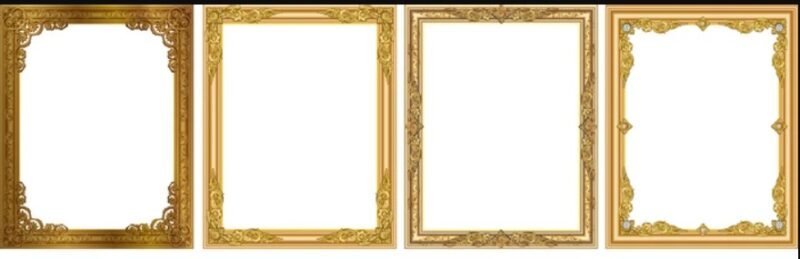
2. Match the material and supply format to your sales channel
| Option | Common buying reason | Checks that affect the decision |
|---|---|---|
| Solid wood | Visible grain and a premium furniture or gift finish | Species, finish consistency, straightness, joint gaps and agreed moisture controls |
| MDF | Painted or wrapped profiles for coordinated retail ranges | Edge sealing, wrap adhesion, joints, backing and destination requirements for composite wood |
| PS moulding | Lightweight decorative profiles | Profile rigidity, corner joints, finish adhesion and handling damage |
| Aluminium | Slim profiles and repeatable assembly | Profile section, finish, corner connectors, sharp edges and glazing clearance |
| Acrylic display frame | Magnetic, floating or freestanding displays | Panel thickness, clarity, scratches, edge finish and magnet or fastener security |
Also choose the supply format: finished frames, cut-and-joined frame-only units, unassembled kits or moulding lengths. Local assembly may reduce some shipping risks, but introduces cutting waste, labour, hardware and storage costs. Compare the complete cost of the route you can actually operate.
3. Build a manufacturer shortlist you can verify
Start with suppliers whose published range matches your construction. The following are discovery examples from their own websites, not an audited ranking or a statement that they are HunterSourcing partners.
| Public source | Published product focus | Question for your shortlist |
|---|---|---|
| Xinrui Crafts | PS and MDF picture frames; Weifang | Which cutting, joining, finishing and packing operations are performed at the quoted factory? |
| Yilingxuan / Framescustom | MDF, wood, PS and aluminium frames; Dongguan | Can the proposed profile, backing and hardware be sampled as one complete assembly? |
| DAMAX | Aluminium frames and profiles; Foshan | Is the offer for assembled frames, kits or profile lengths, and what is included? |
Check the business licence and contracting entity, factory location, bank beneficiary, production/subcontracting scope and the evidence behind capacity claims. A catalogue or trading-platform badge does not prove that a seller controls the relevant production line. A supplier-sourcing brief should specify the checks you need before the shortlist becomes an order.
Evidence that moves the decision forward
- Factory fit: a dated walkthrough or audit tied to the legal entity and the relevant process.
- Product fit: a complete, identified sample checked against your drawing and artwork.
- Order control: approved changes, inspection records and carton/SKU traceability for the production lot.
- Commercial accountability: written defect handling, reinspection, claim deadlines and buyer release authority.
4. Understand MOQ, price and lead time together
Stock profiles, a new colour, a custom moulding and printed retail packaging can have different minimums. Ask for MOQ per design, size, colour and packaging version. A total order quantity does not explain whether a supplier will accept your SKU mix.
| Reference and scope | Published quantity / price | Published timing / conditions |
|---|---|---|
| Wetop: 5 × 7 inch tabletop acrylic frame, 3 mm clear, slot-in print | 100 pcs: US$4–8 each; 500 pcs: US$2–5; 5,000 pcs: US$1.50–4. FOB Shenzhen references | Page lists 3–5 day samples and 15–20 day production; confirm the trigger and calendar. Paid samples listed separately at US$200–500 by complexity. |
| CHIC: wooden photo-frame category; exact size/configuration must be confirmed | Page advertises FOB US$2–7 and a standard MOQ of 300–500 pcs per design; named FOB port and configuration require confirmation | Page lists samples 7–10 days and bulk 25–35 days after sample approval; these are supplier-specific claims. |
The two references cover different products and cannot be used to declare one supplier cheaper. Obtain current written offers for the same configuration. Include tooling, sample courier, branded packing, inspection, collection, export handling, freight, insurance, duties and destination delivery as applicable.
Compare the cost per saleable frame
Use total relevant landed cost ÷ saleable units. In an illustrative calculation, a US$3,000 shipment with 1,000 accepted units costs US$3.00 per unit; if only 950 are saleable, the same spend becomes about US$3.16 each, before any replacement or claim costs. These are assumed inputs for explaining the calculation, not a reported customer result.
Request separate sample, revision, production, inspection and dispatch dates. Confirm peak-season capacity and booking buffers. Sea, air, parcel and FBA services need route-specific transit estimates; production lead time does not include every delivery stage. For T/T or another proposed payment method, verify the beneficiary and define deposit, balance and release conditions in writing. One supplier’s payment split is not a universal industry policy.

5. Approve the frame and the packaging as one product
For a retail frame, a correct sample inside unsuitable packaging is an incomplete approval. Test the finished frame, the protective materials and the actual shipment configuration together. Replacing glass with acrylic changes weight, optical appearance and scratch behaviour, so obtain approval for the exact grade.
| Inspection point | Record in the approval | Reason to hold or investigate |
|---|---|---|
| Fit and assembly | Opening and outside dimensions, rabbet fit, corner gaps, backing closure and supplied hardware | Artwork cannot fit, incomplete closure, loose joints or unsafe edges |
| Appearance and glazing | Viewing conditions, finish reference, scratch/contamination criteria and specified cover thickness | Unapproved colour variation, damaged cover or substituted glazing |
| Display function | Agreed hanger/easel checks, intended orientation and product load conditions | Instability, detached hardware or a construction that does not match the sample |
| Retail and transit pack | Protective film where appropriate, corner/face protection, separators, carton strength and agreed transport test | Glass-to-glass contact, movement, crushed corners or damage after the agreed test |
| Traceability | SKU/size/colour, carton quantities, barcodes, lot record and photographs | Mixed or untraceable cartons and incomplete shipping documents |
Agree the lot definition, sampling standard, inspection level, defect classes and acceptance numbers with the inspector. An AQL value alone is not an inspection plan and sampling cannot guarantee a zero-defect shipment. Use the quality inspection service to discuss the project scope.
- Specify
Drawing, components and pack - Approve
Identified complete sample - Inspect
Lot results and evidence - Resolve
Buyer decision and recheck - Release
Written shipment acceptance
If only a small part fails, the buyer can approve shipment of the accepted portion while the supplier corrects the held portion; release of corrected goods follows the agreed reinspection. If failures are widespread, report the findings to the buyer and hold for its decision on correction, reinspection or rejection. Record the outcome through final acceptance or the buyer’s decision to abandon the goods.
Review our blank Inspection Report PDF and Factory Audit Report PDF to discuss reporting fields. These are templates, not completed factory audits or evidence that a particular frame shipment passed.
6. Check product claims and destination requirements
For US-bound frames containing regulated composite wood, review EPA’s TSCA Title VI import guidance. Applicability can include finished goods containing regulated boards. Check the actual materials, supplier records, labelling and import certification with the responsible importer; do not treat an unrelated factory certificate as product evidence.
FSC claims concern a specific certified supply chain and product scope. Ask for a current certificate and the claim on relevant transaction documents. ISO 9001 concerns a management system. FDA, CE, RoHS and safety-data sheets are not a universal checklist for every decorative frame. Powered or connected digital frames require a separate electronics and destination-market assessment.
Be precise about UV and conservation claims
“Anti-glare,” “UV filtering” and “museum” describe different properties. For example, Tru Vue’s Conservation Clear Glass specification lists 2.5 mm thickness and up to 99% UV blocking over 300–380 nm. That is evidence for that named product, not for generic glass or a supplier’s entire frame range. Specify the required glazing grade and verification method, along with the mounting and mat materials.
Archival news footage below the compliance discussion provides historical context about art imports. For your frame order, ask the customs broker to confirm the current classification, origin and applicable duties for the actual materials and destination.
7. Plan the order around your buyer scenario
- E-commerce launch: start with a limited SKU range, compare glass and acrylic packed samples, and approve barcode placement plus the parcel packout before a bulk order.
- Gallery or print programme: prioritise the exact rabbet depth, mat/backing stack and glazing evidence. Compare frame-only supply with local fitting and avoid unverified preservation claims.
- Hotel or retail rollout: approve the finish, hanging system, location labels and phased-delivery schedule. Keep a reference for replacements so later batches can be checked for consistency.
For a quotation, send a reference photograph or drawing, insert size, preferred construction and finish, quantity per SKU, target market, packaging channel and required arrival date. Ask for a written scope showing who compares suppliers, approves samples, arranges inspection and authorises dispatch. Our logistics service overview can help frame the collection and consolidation discussion.
8. Picture frames manufacturer FAQs
Can I buy picture frames in bulk without ordering thousands of each size?
Ask for the minimum per design, size, colour and packaging version, plus any mixed-order option. Existing profiles may allow a different minimum from custom mouldings or printed boxes. Compare a local trade supplier with China production after including freight and handling; the best route depends on your order mix.
Should I buy finished frames, frame-only units or moulding lengths?
Compare the work included in each offer. Moulding lengths require cutting, joining, hardware, storage and waste allowance; frame-only units still need glazing and fitting. Finished frames may simplify fulfilment but require a suitable transport pack. Calculate the full cost of the format your business can assemble and deliver.
Does the listed frame size describe the picture or the outside dimensions?
Do not assume. Specify the artwork or insert dimensions, visible opening, outside frame size and usable rabbet depth on a drawing. Measure an assembled sample with the actual glazing, mat and backing before approving the bulk order.
How do I specify rabbet depth for thick artwork or a mat-board stack?
List the thickness of every layer and any spacer, then ask the manufacturer to confirm usable depth and backing closure. A shadow-box description is not a substitute for a measured section. Record the agreed dimensions and tolerances in the approved specification.
Is glass or acrylic better for frames sold online?
Compare optical appearance, weight, breakage risk, scratch resistance, thickness and the actual packaging. Acrylic is not automatically scratch-proof or UV-protective, and glass needs an appropriate transport solution. Test a complete packed sample for the intended delivery channel before choosing.
How can I reduce broken glass and damaged corners during shipping?
Agree on corner and face protection, separation, internal movement, carton construction and a transport test suitable for the packed product and delivery route. Record the sample packout and review test results. Extra bubble wrap alone does not establish that the frame will survive distribution.
Does anti-glare glazing protect artwork from fading?
Anti-glare appearance and UV blocking are different properties. Request the named glazing grade, relevant wavelength range and supporting specification or test evidence. Consider the mat, mounting materials and display conditions as well; do not apply a generic museum-quality claim to an unverified frame.
How do I keep colours and frame quality consistent on repeat orders?
Retain the approved sample, drawing, finish reference, glazing grade, hardware and packaging record. Require proposed material or process changes to be approved before production. Inspect the new lot against the same agreed criteria rather than relying only on an old SKU name or catalogue photograph.
What should I approve before paying for bulk frame production?
Approve an identified complete sample, written specifications, SKU quantities, packing, price basis, production schedule and payment milestones. Verify the contracting entity and beneficiary. Agree inspection, defect handling and shipment release responsibilities before committing the production payment.
What happens if inspection finds defective picture frames?
Document the affected items and report the results to the buyer. With its approval, accepted goods may ship while a small rejected portion is corrected and reinspected. Widespread failure normally requires a hold and a buyer decision on rework, reinspection or rejection. Record final acceptance or abandonment and the agreed commercial remedy.
Get a comparable frame quote and sample plan
Send your frame drawing or reference, quantity by size and colour, destination and packing requirements. We can discuss supplier comparison, sampling and inspection support, with fees and responsibilities confirmed for your project.
Email info@huntersourcing.com; WhatsApp / WeChat: +86 15824350182. Enquiry details are used to assess and reply to your request; see our privacy policy. Confirm sample charges, service timing and after-sales arrangements before ordering.
Editorial responsibility: HunterSourcing sourcing team. See our company background. Public supplier figures are attributed above; order-specific terms require current written confirmation.
Related Articles
 Souvenir Manufacturer in China: Custom Gifts, MOQ & Costs
Compare materials, customisation and purchasing decisions for branded gifts and souvenir ranges.
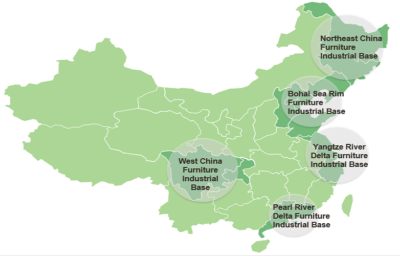 Furniture Import: Decoding China’s Furniture Manufacturing Industry
Plan supplier checks, specifications and quality control for a broader home-decor or furniture sourcing programme.
 Tips & Strategies: How to Successfully Import Glass from China
Understand glass sourcing considerations when evaluating glazing and other glass components for your product range.
Related Post

Furniture is a must for an office or a home. It is available at varying price points as Read more
Wood is extensively used in making furniture around the world. Wood can be molded in any shape or Read more
China offers many types of sofas at an affordable price. When it comes to Chinese Sofa Manufacturer, This Read more
Get Free Quote

Contact Us Get Free Quote!
* Please kindly fill out the form for inquiry
* we will reply to your inquiry within 24hours