
Updated for 2026 · HunterSourcing company and team
HunterSourcing is a China sourcing agent for importers, distributors and brands buying fasteners, locks, hinges, fittings and hand tools. We review your brief and propose a supplier comparison or sampling plan. Agree the scope and charges before paid work begins.
To start, send three details: a product link, photo or part number, your estimated quantity and the destination. Share drawings, packing requirements and target dates when available.
Choosing a China hardware supplier: compare the actual part, manufacturing route and evidence required for its use. Match drawings, material, finish, accessories, quantity units and packing before comparing prices. Use the category specifications below, then follow the quotation and approval steps in sections 2–5.
1. Hardware Categories and Specifications
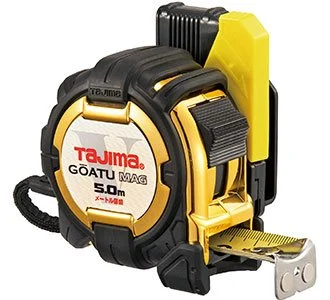
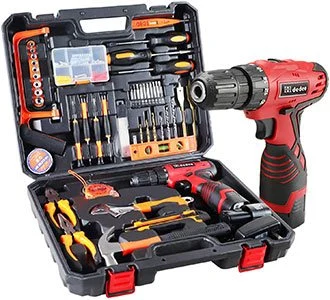
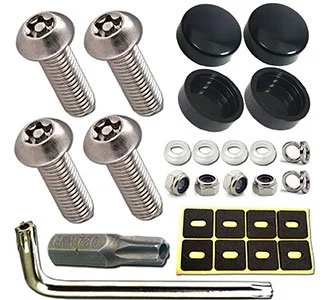
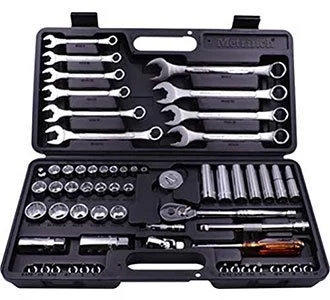
Start with the category that matches your order. The images show product families; the quotation and approved sample identify the exact model, configuration and branding to be supplied.
1.1 Door Hardware and Locks
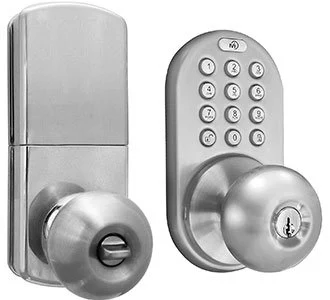
Specifications to confirm
Confirm door thickness, handing, backset or centres, mounting dimensions, lock function, key arrangement, finish and intended use. Ask for a dimensioned drawing and the accessories included.
1.2 Furniture Hardware
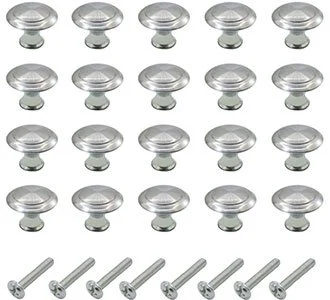
Specifications to confirm
For hinges, define overlay, opening angle, drilling pattern and mounting plate. For slides, define length, installed clearance, load requirement and closing action. Check the actual assembly, not appearance alone.
1.3 Garage Storage and Organization
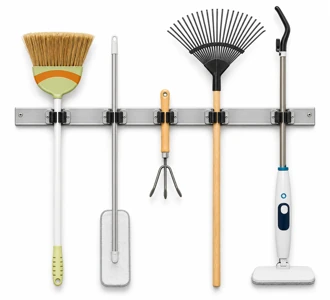
Specifications to confirm
Specify assembled dimensions, material and thickness, required loading, wall or floor fixing, included fittings and packed carton dimensions. Agree how the claimed load will be checked.
1.4 Hand Tools
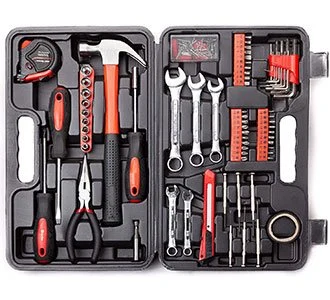
Specifications to confirm
Define the tool type and size, material grade, heat treatment, surface finish, functional requirement and marking. Agree appropriate dimensional and performance checks for the actual tool.
1.5 Measuring and Layout Tools
Specifications to confirm
Separate measuring range, resolution and required accuracy. State units, operating conditions and the calibration or verification evidence needed for the intended task.
1.6 Power Tools
Specifications to confirm
State voltage, frequency, plug, power supply and required functions. For cordless tools, identify the battery and charger configuration, battery energy and destination-market and transport documents. For lithium-powered models, see our lithium battery sourcing guide for battery types and supplier background.
1.7 Screws and Fasteners
Specifications to confirm
Identify thread system, diameter, pitch, length, head and drive, material or property class where applicable, coating, quantity per size and packing count. Provide the mating-part drawing when fit is critical. See our bolts and nuts sourcing guide for fastener types, materials, coatings and sample checks.
1.8 Socket and Wrench Sets
Specifications to confirm
Specify drive size, metric or SAE sizes, points, hand or impact use, material, markings and the complete set contents. Keep substitutes and missing sizes subject to approval.
1.9 Tool Boxes
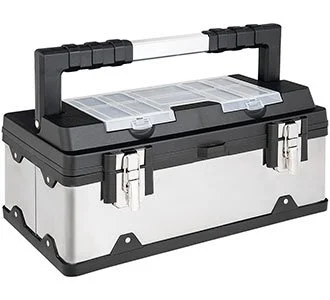
Specifications to confirm
Confirm internal and external dimensions, material and thickness, handle, hinges, latches, trays and any wheels. Agree the loading requirement, packing protection and carton weight.
2. Choosing a Supplier and Sourcing Route
Choose the order route first, then identify who manufactures, finishes, assembles and contracts for the goods. A stock purchase, a custom part and a mixed-SKU shipment need different approvals and cost comparisons.
Swipe the table horizontally to see all columns.
| Order route | Best starting brief | Main approval before purchase |
|---|---|---|
| Stock or standard hardware | Existing model or drawing, quantity per size/finish, destination and required arrival | Confirm available specification, pack quantity, stock identity and repeat availability; approve any proposed substitution. |
| OEM or a custom specification | Revision-labelled drawing, critical dimensions, material/grade, finish, logo and intended use | Agree tooling and ownership, sample charges, trial fit and required checks before production release. |
| Mixed SKUs or several suppliers | Itemized list with units and quantity per line, approved components and packing plan | Reconcile per-SKU minimums, assembly responsibility, missing-item rules, carton data and consolidation costs. |
Useful project outputs: an itemized supplier comparison; a drawing and approved-sample revision record; the agreed inspection checklist and findings; and final packing and shipment data. The work scope identifies which outputs are included, who approves them and which supplier or specialist provides product-specific evidence. Inspection coordination and laboratory testing are separate activities and cost lines.
Use the blank factory audit report (PDF) and blank inspection report (PDF) to prepare the scope and recording format. Record the sourcing, quality and shipping contacts and the buyer’s approval responsibility in the project brief.
Team background: the HunterSourcing team profile introduces Wen Dao (Founder & CEO), Jack Feng (QC Manager) and Mary Wang (Logistics Manager). For your order, confirm the assigned sourcing, quality and shipping contacts and who approves each decision in the project scope.
3. MOQ, Pricing, Samples and Lead Times
Compare the same SKU and complete order scope before choosing a price. Minimums can apply separately to each product, size, finish, logo and packaging design. These supplier-published examples, checked in November 2026, help identify what to ask; request a current quotation for the selected configuration and delivery basis.
Swipe the table horizontally to see all columns.
| Product / publisher | Specification and MOQ reference | Public price or payment reference | Sample / production reference and limits |
|---|---|---|---|
| Hand tools — Sinotools catalogue and general FAQ | PE0300: 10-inch carbon-steel adjustable wrench; PE0311: 8-piece 45# carbon-steel wrench set. General hand-tool MOQ: 500–2,000 pieces, depending on product. | Request the selected model’s price, currency, Incoterm and payment terms. | General FAQ gives 45–90 days. This is not a confirmed model-specific sample or bulk schedule; start event and day basis are unspecified. |
| Self-drilling screws — Oukailuo | Zinc-plated carbon steel with EPDM washer; ST5.5 / ST6.3 and table-listed 1.8 mm pitch. Product-page MOQ: 10,000 pieces. | Unit price, Incoterm, size allocation and payment terms require confirmation. | Sample and production schedule not established from this product page. |
| Concealed hinge DDCH008-G80 — D&D Hardware | Zinc / aluminium alloy; minimum door thickness 40 mm. MOQ states 200 pieces, while packing is by pair: reconcile the quotation unit. | Payment methods listed include T/T and L/C; unit price, deposit ratio and Incoterm require confirmation. | Sample: 5–7 working days; production: 30–35 days. Start event and production day basis are not specified; these are not arrival estimates. |
| Continuous geared hinge LX-H01 — LvXing | Catalogue lengths: 83 / 95 / 120 inches. Published MOQ: 200 pieces. The model page and catalogue describe different load figures. Confirm the exact model, alloy, temper and mounting requirements. Ask for a load report covering the door, frame and fasteners. | Catalogue reference: USD 18.50–26.00 per piece, labelled FOB China. Ask for the quoted configuration, quantity, named port and quote validity. | Reference lead time 20–25 days; start event and day basis unspecified. Treat as a published reference, not a live confirmed quotation. |
Keep supplier terms separate: Fasto’s general FAQ states a usual minimum of 500 kg per size, regular delivery of 35 days and 30% deposit with the balance against a bill-of-lading copy. It also lists free standard samples only below 20 pieces per item and below 0.5 kg total, with freight paid by the buyer. These are Fasto’s published conditions, not Oukailuo terms or a site-wide payment policy. Its delivery start event and day basis are unspecified.
Maxal’s service guide separately lists 500 pieces for logo customization and 1,000 pieces for a colour box, with general delivery 50–60 days after advance payment depending on items and quantity. Packaging and branding minimums must not be mistaken for a base-product MOQ.
Agree the work, fees and approval points
Swipe the table horizontally to see all columns.
| Work or charge | Confirm in the scope or quotation | Approval and responsibility |
|---|---|---|
| Supplier research and agency work | Products, number or scope of comparisons, deliverables and the basis of any agency charge | Buyer agrees the scope and charges before paid work begins; identify the contracting and payment parties. |
| Sampling, tooling and branding | Sample configuration, tooling/setup, courier, ownership and any conditional sample credit | Buyer approves the exact revision and costs; the supplier confirms production and repeat-order conditions. |
| Inspection, tests and corrective work | Inspection scope, specialist testing, rework, replacement, reinspection and release documents | Identify who pays each item and who makes the release decision before the order proceeds. |
| Packing, consolidation and shipment | Packing/assembly labour, storage if used, origin charges, freight, insurance and destination scope | Use the same Incoterm and named place/port when comparing offers; record exclusions and payment milestones. |
Compare two offers for the same SKU
Illustrative calculation: assume 1,000 unbranded cabinet handles with the same approved drawing, material, finish and individual packing, quoted in USD at the same named EXW pickup point. All amounts below are assumed solely to demonstrate comparison; enter the actual location and confirmed costs in your RFQ.
Swipe the table horizontally to see all columns.
| Cost line — same 1,000-piece order | Assumed offer A (USD) | Assumed offer B (USD) |
|---|---|---|
| Product unit price / piece | 3.00 | 2.80 |
| Product subtotal | 3,000 | 2,800 |
| One-time setup | 120 | 250 |
| Individual packing | 400 | 500 |
| Inspection allowance | 100 | 100 |
| Comparable subtotal before other costs | 3,620 | 3,650 |
| Comparable amount / piece | 3.62 | 3.65 |
Offer A’s comparable subtotal is USD 30 lower even though offer B has the lower product unit price. Samples, specialist tests, agency charges, freight, insurance and taxes are excluded from both calculations and must be added on the same basis where applicable. The supplier references above and this assumed calculation are separate; the example is not a HunterSourcing quotation.
Download the blank Hardware Sourcing RFQ and Quote Comparison Checklist (CSV) to collect matching specifications, units, costs and delivery terms from each supplier.
4. Material, Finish and Quality Checks
Set measurable acceptance criteria before production. A hardware quality plan should connect the approved drawing and sample to dimensional, material, finish, functional and packing checks, then record how the inspected lot is accepted, corrected or held for a decision.
Swipe the table horizontally to see all columns.
| Product family | Checks to specify | Evidence and release record |
|---|---|---|
| Fasteners | Thread/diameter/length, head and drive, material or property class where applicable, coating and count | Approved drawing, relevant material/lot records, agreed gauges and performance tests; do not infer grade from appearance. |
| Hinges, locks and furniture fittings | Mounting pattern, clearances, operating direction, travel, finish consistency and accessories | Fit trial on the actual assembly, identified approved sample and relevant performance/document scope. |
| Hand tools and sockets | Size/interface, material, surface, marking and intended manual or impact use | Agreed dimensional and functional checks, with the relevant performance standard and method where specified. |
| Measuring tools and storage products | Required measuring accuracy or loading, dimensions and operating conditions | Appropriate verification/calibration or loading evidence matched to the intended duty, rather than an undefined quality grade. |
The ISO 1711-1:2019 summary addresses hardness and torsional-strength requirements for hand-operated wrenches and sockets. The ISO 898-1:2013 summary concerns specified carbon- and alloy-steel bolts, screws and studs; it is not a universal specification for stainless, self-drilling or every other fastener. Confirm the relevant product, version and test scope rather than copying a standard onto an unrelated SKU.
Agree the lot, inspection level, sampling plan, defect definitions and acceptance/rejection rules before inspection. ISO 2859-1:2026 provides AQL-indexed lot-by-lot attribute sampling schemes. AQL is part of an agreed sampling system, not a promise that every delivered unit is defect-free. Do not choose acceptance numbers without the complete plan.
- Approve the referenceRecord the drawing, sample, finish and packing revision before production release.
- Record the findingsLink measurements, photos, defects and shortages to the identified lot and agreed checklist.
- Resolve and releaseAgree containment, rework, replacement or credit, costs and reinspection. Record the buyer’s release decision.
For corrosion-sensitive or safety-critical use, give the actual environment, mating materials and engineering requirements to the responsible reviewer. A salt-spray result, material label or supplier certificate must be matched to the agreed scope; none by itself proves service life. Record spare-part identity, claim evidence, notification procedure and responsibility for replacement freight in the order terms.
Record the decision when a check fails
Swipe the table horizontally to see all columns.
| Issue | Evidence to record | Decision and cost responsibility to agree |
|---|---|---|
| Dimension, thread or installation mismatch | Drawing revision, measurements, mating-part details and an identified sample | Hold the affected items; supplier proposes rework or replacement, buyer approves the fit/release decision, and parties record costs and reinspection. |
| Finish, material or required performance differs | Approved reference, lot identity, photos and applicable measurement/test findings | Agree containment, corrective action and the evidence required for release; identify testing, rework and replacement charges. |
| Missing kit items or packing/count errors | Approved bill of materials, packing specification, counts and shortage photos | Agree completion/repacking, recount and dispatch changes, including the responsible party and added handling/freight. |
| Damage found in transit | Carton and product photos, shipment references, delivery condition and damage record | Identify the stage and applicable sales, freight and insurance terms; agree the claim route and responsibility for replacement or return freight. |
Keep the finding, proposed remedy, cost allocation, revised timing and buyer decision together in the order record. Confirm spare-part identity, claim-notification requirements and the agreed replacement process before ordering.
5. Compliance, Packing and Shipment Planning
The product’s intended use and destination determine which compliance evidence needs checking. Plan production, inspection, packing, dispatch and arrival as separate milestones. Use the actual SKU configuration, carton data and battery details where relevant when agreeing documents and shipment scope.
The EU CE marking guidance states that CE applies to products covered by the relevant rules. The IEC 62841-1 catalogue entry describes general safety requirements for motor-operated tools; the correct product part, adopted version and destination requirements still need checking. A standard reference or factory audit is not an approval of the actual product. Have battery, electrical, radio or construction-use documentation matched to the selected configuration where relevant.
Swipe the table horizontally to see all columns.
| Milestone | Required information | Approval point |
|---|---|---|
| Specification and sample | Drawing revision, approved assembly, finish and packing sample | Resolve substitutions and document requirements before production. |
| Production and inspection | Production completion, presented lot, inspection/rework window and release record | A factory-finished date is not a shipment-ready or arrival date. |
| Packing and consolidation | Carton count, packed dimensions, net/gross weight, pallets if used and SKU labels | Check heavy cartons, sharp edges, separation of finishes and transport protection. |
| Shipment and delivery | Named origin/destination, proposed route, clearance responsibilities and destination charges | Compare the same delivery scope and update the plan when assumptions change. |
Dense fasteners and bulky tool boxes produce different freight and handling costs. Quote actual packed data, not only product weight or catalogue dimensions. For cordless tools, declare the exact battery configuration and obtain route-appropriate transport documents. See logistics and consolidation planning for the shipment inputs to collect. Agree payment beneficiary, deposit, balance-release conditions and change treatment in writing; do not assume a platform badge guarantees a transaction.
6. Three Hardware Buying Scenarios
Use these illustrative purchasing scenarios to prepare your brief and approval decisions. Quantities are planning inputs; the applicable supplier minimums and order terms come from the selected quotation.
Swipe the table horizontally to see all columns.
| Planning scenario | Buyer brief | Decision before ordering |
|---|---|---|
| Furniture fittings replenishment | Assume 2 hinge types and 2 slide lengths for an existing cabinet range | Approve each mounting/clearance combination, finish reference and accessories; total order quantity does not automatically satisfy each SKU minimum. |
| Private-label retail tool kit | Assume 500 sets with several tools, a carry case and printed sleeve | Approve an itemized bill of materials and assembled sample. Separate component, logo, case and packaging minimums; agree substitutions and shortage treatment. |
| Mixed fastener purchase | Assume 10 sizes with different quantities and one export shipment | Confirm grade/thread/coating by SKU, piece-versus-weight basis, packing counts and traceability. Compare full delivered cost and repeat availability. |
For repeat orders, retain the approved drawing and sample reference and identify any change to materials, treatment, finish or packing. “Same as last time” is insufficient when the configuration or production route has changed.
7. Frequently Asked Questions
Find direct answers to common decisions about supplier identity, order minimums, fit, quality, cost and delivery. Apply each answer to the selected product and written order scope.
7.1 How can I verify a China hardware supplier and understand whether it is a factory or a trading company?
Verify who accepts the order, where the goods will be made and who controls the operations that matter for your SKU. A direct factory can suit a specialist production order; a trading or sourcing arrangement can suit an assortment. The useful comparison is responsibility and capability for your order, rather than the business label alone.
Alibaba’s assessment-report guidance identifies business type, factory address, production capability and assessment date as fields to examine. Match these with the quotation and ask which operations, such as machining, heat treatment or plating, are outsourced. Reconcile the contracting name, invoice issuer and payment beneficiary; obtain a written explanation where different entities are involved.
Our buying recommendation: Request a responsibility list naming the party that approves drawings, controls subcontractors, arranges inspection and resolves defects. For a first order, seek SKU-specific evidence and a relevant sample before committing to bulk production. If the seller cannot explain where a critical process happens or who answers for a failed inspection, resolve that gap before paying a deposit. A factory audit and an inspection of the actual production lot answer different questions; select each according to the risk.
Sources: Alibaba: supplier assessment reports.
7.2 What can I do if a hardware supplier’s MOQ is higher than my first order?
Identify what creates the minimum: a production run, a particular size or finish, or custom packaging. Ask for the minimum per SKU and the order unit. Combining several items does not necessarily meet a minimum that applies separately to each size.
Request comparable offers for standard stock in plain packing, a paid trial batch and the normal production quantity. Keep fit, material and performance requirements consistent. Fasto’s published FAQ, for example, states a usual minimum of 500 kg per size, with negotiation possible for popular sizes. This is that supplier’s published policy; the selected item and current offer still need confirmation.
Our buying recommendation: Compare the extra cost of a smaller batch with the cash, storage and unsold inventory created by the larger order. Simplify optional colour, logo or packaging choices before compromising a functional specification. If repeat demand is uncertain, consider a stockist or local distributor for the first order, then reconsider factory production after the product and demand are established. Ask whether an agreed trial sample will use the same material and process proposed for repeat supply.
Sources: Fasto: published order minimums.
7.3 What specifications should I send to avoid ordering hardware that does not fit?
Provide a drawing or measured reference that identifies the mating parts, units and critical dimensions. Separate requirements that must remain unchanged from features where the supplier may propose alternatives. This gives the supplier room to quote efficiently without guessing what will fit.
For fasteners, specify the thread system, diameter, pitch, length, head and drive, relevant standard or drawing revision, material or property class, and finish. Bossard explains that thread geometry, tolerances and coating affect assembly. For hinges, include overlay or inset arrangement, door thickness, drilling pattern, mounting plate and opening clearance. Blum’s positioning and drilling guidance illustrates why the hinge and its mounting interface must be considered together.
Our buying recommendation: Ask the supplier to mark every proposed deviation on the drawing before sampling. Check the finished, coated part on the intended assembly, including the supplied screws, plates or accessories. Record both the approved part and its mating component. If a substitute changes a hole pattern, clearance or thread, obtain technical approval before accepting it; a similar photograph is not a sufficient basis for interchangeability.
Sources: Bossard: thread dimensions and tolerances; Blum: hinge drilling and positioning.
7.4 How should I check samples and production consistency before buying hardware in bulk?
Use two separate decisions: approve the product specification before production, then approve the inspected production lot before shipment. A sample establishes the reference for evaluation; it does not establish the quality of every unit subsequently made.
Identify the approved sample, drawing revision, material, finish and packing. Agree a checklist for fit, dimensions, operation, appearance and accessories, plus any separate laboratory tests. QIMA describes AQL sampling using lot size, inspection level and acceptance thresholds. NIST explains that acceptance sampling supports an accept-or-reject decision rather than an exact estimate of lot quality. An AQL of 2.5 therefore does not guarantee a maximum defect rate of 2.5% in each shipment.
Our buying recommendation: Define what would stop shipment before the inspector arrives: for example, a part that cannot assemble or a failed required test. Select samples from the actual lot under the agreed plan. If inspection fails, request documented corrective action and reinspection of the affected lot. Approving a replacement sample alone does not resolve a batch failure. Keep shipment release conditional on the agreed evidence, with no unapproved substitutions.
Sources: QIMA: AQL sampling and inspection criteria; NIST: what acceptance sampling establishes.
Use the blank inspection report (PDF) to record the agreed checks and evidence for shipment release.
7.5 What evidence should I request for hardware material, strength and corrosion performance?
Choose evidence according to what a failure would affect: assembly, load capacity, corrosion exposure or another specified requirement. A collection of certificates is useful only when its scope and product identification match the hardware being ordered.
Request the specified material grade and available batch-linked material records. For mechanical performance, agree appropriate tests and acceptance criteria: Bossard distinguishes tensile strength, yield strength and hardness, which are not interchangeable results. For corrosion, specify the finish, exposure test and pass/fail criterion. ASTM cautions against predicting natural-environment performance from salt-spray data alone; test hours do not directly establish outdoor service years. ISO 9001 concerns a quality management system, rather than replacing product-specific verification.
Our buying recommendation: Build a short evidence checklist for each critical requirement: the document or test needed, the sample or lot it identifies, who reviews it and when approval is required. Avoid paying for unrelated reports while leaving a critical property unverified. For safety-critical or load-bearing applications, have the responsible engineer determine the specification and verification plan. If a report concerns a different material, finish or model, ask the reviewer whether it applies before accepting it.
Sources: Bossard: mechanical properties of screws; ASTM B117: salt-spray interpretation; ISO: quality management systems.
7.6 Should I choose standard hardware or ask a supplier to make a custom part?
Prefer a standard part when it meets the functional requirements and can be supplied reliably. Consider custom hardware when a necessary feature cannot be met that way.
Compare both routes against the same assembly requirement. Include any assembly redesign needed for a standard alternative, and any development, tooling, sampling and inspection work needed for the custom part. Ask separately about the first order and repeat orders: a low recurring part price does not show the full cost of getting the design into production.
Our buying recommendation: While demand or design is still changing, assess an available standard part or a limited prototype route before committing to production tooling. If custom production is justified, freeze the drawing revision and approval criteria, then document tooling control, maintenance, replacement charges and repeat-order arrangements. Confirm whether the quoted tooling can support later volumes or design changes. Approve a custom first article against the drawing and actual assembly before authorizing the production run; do not treat a low quotation as evidence that development is complete.
7.7 Can I source a mixed tool kit or hardware assortment without losing control of the individual items?
A mixed kit needs control at both component level and finished-set level. Specify what each item must do, then define how the complete kit is counted, assembled, labelled and packed. Supplier capability and component minimums need confirmation before agreeing a finished-kit price.
Prepare a bill of materials with part identifiers, sizes, quantities per kit, material or grade, finish and required performance. Include cases, inserts and accessories. For a socket set, identify the sockets, ratchet, extensions and matching drive interfaces. Clarify whether the case and loose bits count toward the advertised piece total. Name the party responsible for component purchasing, assembly and final inspection.
Our buying recommendation: Approve a complete packed kit and retain its item list as the reorder reference. Require approval for substitutions and check completeness as well as fit and function. Identify components whose shortage or failure would make the whole kit unusable, and agree how these can be replaced individually. For branded components, request documented supply authorization rather than inferring it from appearance or a catalogue listing.
7.8 How do I compare the real delivered cost of China-sourced hardware with a local supplier?
Compare the cost of receiving usable, accepted hardware at the same destination. Align specifications, quantity, packing, inspection and delivery scope first. Otherwise, a price difference may simply reflect work or risk omitted from one offer.
List goods, setup or tooling, samples, packing, inspection and testing, agency services, origin handling, freight, insurance, applicable import charges and final delivery. Mark each amount as included, excluded or estimated, and record validity. DHL identifies shipment weight, dimensions, route and service as pricing inputs. ICC explains that Incoterms allocate delivery-related responsibilities but do not settle payment, ownership or contractual remedies; specify the rule, named place and edition, and agree the other terms separately.
Our buying recommendation: Resolve unknown charges before choosing a winner. For an existing order, divide the relevant total cost by the quantity actually accepted for use, not merely the quantity purchased. For a proposed order, show the quoted cost separately from any risk allowance and explain the basis of that allowance. Do not invent a defect percentage to make one offer look cheaper. Consider local stock when speed, small quantities or replacement access outweigh the unit-price saving.
Sources: ICC: Incoterms and the sale contract; DHL: freight inputs and delivery estimates.
Use the blank quote comparison worksheet (CSV) to list included, excluded and estimated charges side by side.
7.9 What should a hardware supplier confirm about production, shipping and customs timing?
Ask for a schedule ending at the point where you need the goods, with separate production and transport milestones. A factory completion date is not an arrival date, and an unbooked transit estimate is not a delivery commitment.
Record sample and drawing approval, material readiness, production completion, inspection and corrective work, cargo readiness, departure, clearance and final delivery. Define each start event and whether quoted days are working or calendar days. Ask what must be approved before production can begin. DHL’s guidance treats transit and delivery estimates as shipment-specific and identifies customs clearance among the possible causes of delay.
Our buying recommendation: Work backwards from an installation or launch date with the supplier and forwarder. Identify the latest acceptable cargo-ready date, allowing for inspection, any agreed correction time and the available transport service. If the plan leaves no room for a failed inspection, discuss a different supply route, staged delivery or revised date before ordering. Require approval for changes that affect the schedule, and agree who reports them. Faster freight can shorten transport; it does not by itself resolve unfinished production or missing approval documents.
7.10 What should I agree about defects, spare parts and replacement hardware before placing an order?
Agree how a defect will be assessed and corrected before placing the order. State the evidence required, notification period, remedy, timing and cost responsibility. A replacement promise is incomplete if it leaves freight, reinspection or installation costs unresolved.
Separate pre-shipment failure from a problem found after delivery. Before shipment, agree sorting, rework or remake requirements and the evidence needed to release the lot. After delivery, retain batch and carton identifiers, photographs, measurements or test findings, the approved specification and correspondence. If using Alibaba Trade Assurance, record the requirements in the eligible order and check its current claim conditions. The platform’s refund policy has eligibility requirements; it is not a blanket guarantee that every overseas return will be accepted.
Our buying recommendation: Compare practical remedies before agreeing to ship a heavy or low-value item back internationally. A verified replacement component, approved local rework or a credit may suit a particular defect, but confirm technical suitability and costs first. Record spare-part identifiers and matching interfaces for hinges, locks and kits. Where safe use or conformity is in question, obtain the appropriate technical assessment before accepting a repair or continuing use.
8. Request a Hardware Sourcing Quote
Start with a product reference, estimated quantity and destination. Add the intended use, drawing, material, finish, packing or target arrival date when available.
After you send your brief: we clarify any missing specifications and propose the supplier comparison or sampling work. Agree the scope, charges and approval points before paid work begins. Estimates depend on the final specification and supplier responses.
Your contact and product details are used to review and respond to the sourcing enquiry. Share the information needed at this stage; sensitive drawings can follow the agreed confidentiality arrangements.
Related Articles
Continue with fastener selection, inspection planning and freight-forwarder checks. Each guide supports a different step in preparing a hardware order.
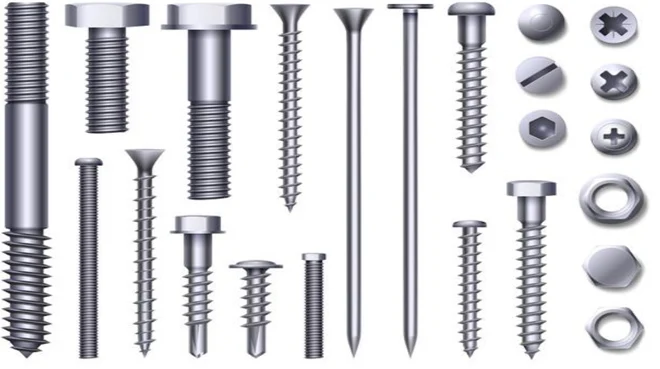
Sourcing Excellence: China’s Bolts and Nuts Suppliers
Reviews fastener types and sourcing checks for size, material, coating, samples and supplier selection.

Mastering China Inspection for Successful Imports
Explains inspection stages, quality records and factors to consider when choosing an inspection provider.

Choosing the Best Freight Forwarder for Your China Imports
Covers consolidation, sea and air freight options, and practical checks when selecting a China freight forwarder.