

Pet Food Manufacturer in China: A Buyer’s OEM Guide
CHINA SOURCING GUIDE · PET FOOD OEM
Choose a pet food manufacturer by the production process, destination-market eligibility and evidence for your actual batch. Confirm the import route before paying for development. Then approve the specification, sample, testing plan and written release conditions before bulk production. A low MOQ or a certificate logo does not answer all of those questions.
HunterSourcing is a China sourcing agent, not a pet food factory. We help buyers compare suppliers, coordinate samples, follow up agreed production milestones and arrange inspection. The selected factory manufactures the food; laboratories and the importer have separate responsibilities. The tasks, deliverables and fees we undertake are agreed for your project.
Prepared by the HunterSourcing sourcing team · Public sources checked 26 October 2026. Supplier figures summarize their published product and commercial information; confirm current quotations, supporting records and delivery terms for your order.
1. Check the destination market before choosing a factory
The first question is whether this recipe, ingredient origin, process and manufacturing site are suitable for your destination. Selling pet food in China does not establish permission to export every recipe to your country. Give the importer or responsible specialist the ingredient list, animal species of origin, processing method and proposed factory address before committing to a production order.
| Destination | What to confirm | Evidence to put in the project file |
|---|---|---|
| United States | FDA facility registration and import-entry obligations, applicable FSVP responsibilities, label requirements and any state rules. Animal-origin materials also need an APHIS assessment. | Importer identity, written requirements checklist and product-specific permit or exemption assessment. Start with FDA import guidance and the APHIS permitting route. |
| European Union | Requirements for the actual animal-by-product category, authorised origin, manufacturing establishment, health documents, entry controls and label language. | Use the Commission import framework and TRACES establishment guidance. Match the legal site and relevant activity; a Chinese export number alone is insufficient. |
| United Kingdom or another market | Local feed and animal-health requirements, importer arrangements, ingredient restrictions and applicable label rules. | A destination-specific checklist agreed with the importer and appropriate specialist; do not reuse a US or EU checklist as universal approval. |
| Retail or marketplace distribution | Product eligibility plus the channel’s packaging, barcode, remaining-shelf-life, carton and receiving requirements. | Current written channel specifications, including whether shelf life is measured at dispatch, port arrival or warehouse receipt. |
Separate complete food from treats, toppers and complementary products. For a US “complete and balanced” claim, request the nutritional adequacy basis for the stated species and life stage; a crude-protein percentage is insufficient. The FDA explains nutrient-profile and feeding-trial substantiation. AAFCO does not certify or approve pet food. Do not treat “AAFCO certified” or “FDA approved” artwork as proof of product approval.
2. Compare China pet food manufacturers on a like-for-like brief
Use supplier websites to find candidates, then verify the seller and production site. The China-based candidates below publish relevant product or commercial information. The examples summarize publicly available supplier information; confirm product-specific export eligibility for your destination. Ask each to quote your exact recipe, SKU and destination.
| Candidate / primary source | Published product scope | Published MOQ / timing | Buyer verification question |
|---|---|---|---|
| Kaimeng / Kaimengwei | Treats, wet food and freeze-dried products. | 300 kg per item; completion within 45 days after artwork confirmation. | Does the minimum cover your formulation and retail pack? Request the exact legal site, current audit scope and destination-specific eligibility. |
| Shandong Mofeedy | Kibble, freeze-dried and air-dried products with OEM/ODM support. | Kibble trial orders stated at 2–5 tonnes; freeze-dried products from 500 kg. | Which recipe and packaging options qualify? Verify the actual process, batch-testing records and manufacturing-site identity. |
| PetNourishFood | Dry and wet food, freeze-dried and other treats. | Listed freeze-dried products: 500 kg; kibble: 1 container; sample dispatch described as 5 days. | Is the offer from an owned or partner plant? Identify the site, container loading plan, stock-versus-custom sample and courier transit separately. |
| PawTaste | Dried and freeze-dried pet treats. | Website advertises 200 kg+; standard styles 20–30 days and custom projects 45–90 days. | Which published period applies to your SKU? Confirm recipe, pack, testing and approval triggers before comparing its schedule. |
These figures are separate supplier programmes, not an industry price list or a promise that a smaller order is feasible. Convert tonnes to kilograms when comparing offers and distinguish per-recipe, per-flavour, per-pack and per-order minimums. A packaging print run can have its own minimum even when the food MOQ is low.
Verify the company licence, quotation entity, manufacturing address and payment beneficiary. If a seller uses several plants, name the approved site in the purchase specification and require written approval before a site, ingredient or process substitution. For species-specific supplier research, continue to our dog food manufacturers guide or cat food manufacturers guide; this page covers the cross-category buying process.
3. Freeze the specification, formulation rights and packaging
A reference photo is a starting point, not an approved manufacturing specification. Ask the manufacturer to confirm an existing base recipe, an adaptation or a new formulation. Specify who owns the formula and artwork, what the development fee includes, any exclusivity, and whether the recipe can be transferred. Discuss confidentiality before sending proprietary material.
| Product form | Recipe / physical specification | Pack and handling | Required supporting evidence |
|---|---|---|---|
| Dry kibble | Species, life stage, complete/complementary purpose, ingredient restrictions, analytical targets, kibble size, density and tolerances. | Fill weight, moisture barrier, reseal, lot/expiry coding, carton and pallet. | Nutritional substantiation where claimed, process controls, lot analysis, packaging and stability evidence. |
| Wet food | Species, feeding purpose, meat/ingredient identity, texture, fill weight and defined thermal process. | Can, tray or pouch size, closure specification and transport protection. | Process validation appropriate to the format, seal checks, shelf-life and relevant microbiological evidence. |
| Freeze-dried food / treats | Raw-material identity and origin, whole piece or powder, moisture/water-activity limits and intended-use claims. | Barrier pouch/jar, agreed oxygen or moisture protection, net weight and coding. | Validated hazard controls, batch-linked microbiology and stability evidence; freeze-drying is not itself proof of pathogen control. |
| Air-dried / semi-moist treats | Ingredients, thickness, texture, moisture targets, processing and any preservative or acidification approach. | Retail portion, barrier film, seal, carton count and storage conditions. | Product-specific safety plan, relevant analytical tests, palatability protocol and shelf-life support. |
| Bird or other species feed | Target species, ingredient fractions, seed/pellet size, dust, foreign matter and intended feeding use. | Fill weight, contamination protection and transport/storage limits. | Species-appropriate formulation, relevant contaminant controls and destination review. Use a separate brief from dog/cat recipes. |
Record the approved sample ID, formula revision, artwork version and acceptance checklist together. A sensory sample can support appearance, texture and an agreed palatability evaluation; it does not establish nutritional completeness or safety of a later production lot. Shelf life needs evidence for the actual recipe, packaging and storage conditions. Agree the minimum remaining shelf life at destination without assuming that every product has an 18- or 24-month life.
4. Compare total acquisition cost and meaningful milestones
Compare the same recipe, quantity, net weight, currency and named delivery term. Obtain current, project-specific FOB quotations for the same product specification and named port. Use a written breakdown rather than treating an invented unit price as a buying benchmark.
| Cost line | Ask the supplier / service provider to itemise | Condition to agree |
|---|---|---|
| Food and conversion | Price per kg and per retail unit, recipe revision, quantity tiers, overrun allowance and quote validity. | Check that gross carton weight is not substituted for net food weight. |
| Development and samples | Formula trials, stock versus custom samples, sample tests, courier and any refundable charges. | State who owns the formulation and whether revisions or repeat trials cost extra. |
| Packaging and setup | Retail bag/can/pouch, printing setup, labels, cartons, pallet and unused printed packaging. | Define the packaging minimum and ownership of leftover stock. |
| Testing and verification | Laboratory panel, sample collection, audit, inspection and any reinspection. | Name the payer, scope and evidence required before release. |
| HunterSourcing service | Agreed sourcing, sample coordination, follow-up, inspection or logistics work. | Record the fee basis, included deliverables and exclusions; identify any supplier-paid commission or rebate. |
| Freight and destination | Origin handling, mode, named Incoterm place/port, insurance, clearance, duties, taxes and last-mile delivery. | Use a current route-specific freight quotation and importer assessment. Do not describe factory lead time as door-to-door delivery. |
| Remedies and payment | Deposit, balance trigger, claims evidence, repair/replacement/credit terms and freight responsibility. | Agree the payment and remedy schedule in writing before deposit; do not assume a standard percentage or guaranteed reimbursement. |
Total acquisition cost = food + development/setup + packaging + testing + inspection + agreed sourcing fees + origin handling + freight/insurance + applicable duties/taxes + destination charges. Include each charge once. For unit comparison, price per kg = retail-unit price ÷ net kilograms per unit. A worked unit example: a 100 g pouch contains 0.1 kg, so multiply its unit price by 10 to compare per kg. This is a conversion formula, not a market price.
Request separate dates for recipe approval, sample dispatch, laboratory results, artwork lock, manufacturing completion, corrective work, shipment and destination receipt. State the event that starts each period. Book a launch against the accepted destination plan, with a written response if testing, a shipping change or a failed lot delays dispatch.
5. Use six approval gates from brief to accepted delivery
Each stage should end with a document and a decision. The following is a proposed project-control structure to agree with the buyer, manufacturer and relevant specialists. It does not imply that every task is included in a standard service fee.
- 1 · DefineMarket and product brief
- 2 · VerifySeller, site and eligibility
- 3 · ApproveRecipe, sample and pack
- 4 · MonitorProduction and traceability
- 5 · ReleaseBatch evidence and decision
- 6 · CloseArrival review and remedy
| Gate | Deliverable to request | Decision / accountable party |
|---|---|---|
| 1. Market and brief | Species, use, ingredient origins, destination, desired volume, packaging and eligibility questions. | Buyer/importer and relevant specialist confirm a viable product route before development commitment. |
| 2. Supplier verification | Comparison sheet, seller/site identity, certificate scope and outstanding verification questions. | Buyer selects the supplier; unresolved import or site eligibility remains a hold point. |
| 3. Sample and contract | Signed sample record, recipe/artwork revisions, test plan, written quote, schedule and remedy terms. | Buyer signs off the agreed specification; factory confirms manufacturing feasibility. |
| 4. Production follow-up | Approved production site, ingredient/packaging lots, production batch, change log and agreed milestone updates. | Manufacturer controls its process; agent follows the agreed checkpoints and escalates deviations. |
| 5. Pre-shipment decision | Inspection report, batch-linked COA/lab reports, packing list, coding check and required export documents. | Buyer authorises commercial release only after required safety, legal and agreed quality conditions are satisfied. Carrier booking does not replace this decision. |
| 6. Arrival and closure | Receipt quantities, lot/coding check, reported discrepancies and agreed claim disposition. | Buyer documents acceptance or the remedy. Unresolved goods remain on an issue register until a written disposition closes the agreed work. |
6. Ask whether the report belongs to the food you will receive
A useful certificate of analysis (COA) identifies the sample, batch, test method, result, unit and agreed limit. Confirm who collected the sample, from which lot, when it was collected, and how it was sealed and transferred. A laboratory logo on a supplier PDF is not a verified chain of custody. Check laboratory accreditation and scope for the relevant method rather than relying on an accreditation badge alone.
| Check | Evidence to request | What it cannot establish alone |
|---|---|---|
| Batch identity and traceability | Ingredient source lots → production batch → finished-pack code → carton/pallet → shipment; check that records reconcile. | An attractive factory video does not connect your shipment to a specific production lot. |
| Microbiological hazards | Agreed organisms, analytical method, sample plan, result/limit and corrective-action procedure; process controls supporting the result. | A negative result for one sample cannot guarantee every pack or replace preventive controls. |
| Nutritional analysis and claims | Analytical targets, units/basis, method and species/life-stage substantiation where a complete-food claim is made. | High crude protein alone does not establish a complete diet or a therapeutic benefit. |
| Chemical / physical risks | Risk-based contaminant panel, ingredient restrictions, foreign-body control and limits appropriate to the product and destination. | A generic heavy-metal report is not automatically an adequate mycotoxin or process-control assessment. |
| Moisture / water activity | Method and agreed limits for the actual product; controls through drying, cooling, packaging and storage. | Moisture percentage and water activity are different measurements; one is not a universal substitute for the other. |
| Packaging and shelf life | Seal/closure results, pack specification, lot/expiry legibility, transport protection and stability study under stated storage conditions. | A shelf-life number copied from another recipe or pouch is not validation for this SKU. |
The FDA animal-food preventive-controls guidance explains why testing verifies controls rather than preventing a hazard by itself. Define the laboratory panel with an appropriate specialist. AQL-based appearance or packaging sampling is a separate inspection tool; it does not replace microbiological testing, process validation or food-safety controls.
Ask for a complete evidence pack, not a collection of logos
Before booking inspection, request a redacted example linking the purchase specification, sample approval, batch code, laboratory report, inspection findings and release record. Confirm whether the example is a blank template, a supplier-provided sample or a documented HunterSourcing project. They are different levels of evidence. The public supplier references above summarize information provided by the named suppliers.
Review the documents before booking the work
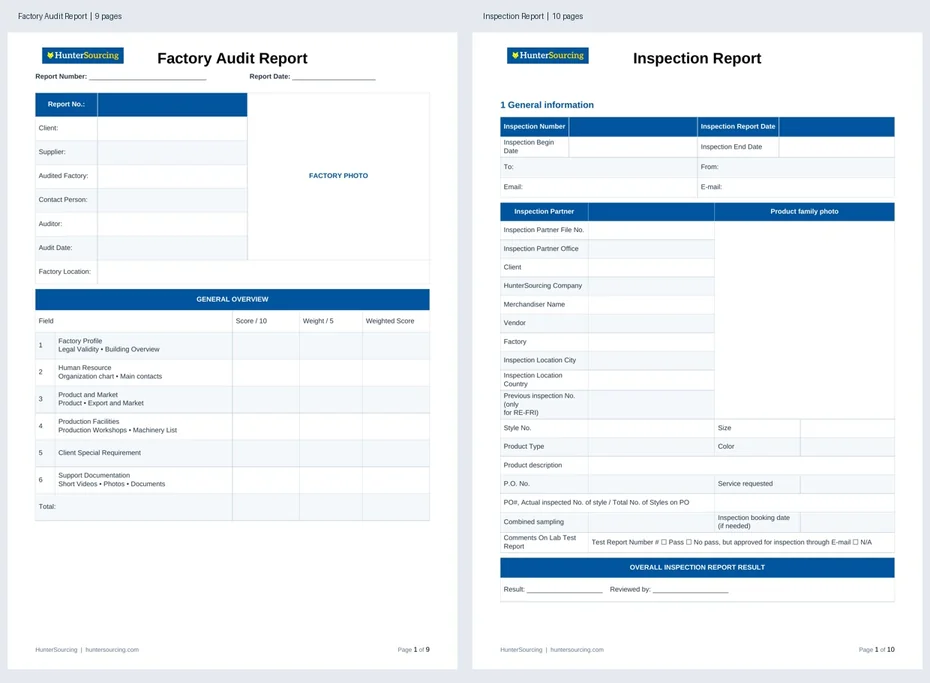
Download the same general report structures already published in our services guide. Use them to discuss the fields, photos and conclusions you expect. These blank planning templates outline report fields for a product-specific inspection or factory review.
Inspection Report
Review the fields for inspection identity, order and shipment quantities, sample selection, findings, laboratory-report comments and the overall conclusion.
Factory Audit Report
Review the legal-identity, factory-profile, production-facility, special-requirement and supporting-document sections before agreeing the audit scope.
For pet food, agree an annex covering the recipe revision, ingredient origins, production site and process, batch and pack codes, sample custody, laboratory methods and limits, food-safety controls, packaging stability and destination requirements. The general forms do not replace this annex or a laboratory-issued COA. Permission to perform an inspection is a separate decision from permission to ship the food.
Keep one traceable approval file for each order
Ask the supplier and agreed service providers to connect the records below. Store document IDs and versions, and mark each item as received, verified, open or rejected. This diagram describes the proposed record structure; it is not a completed case study.
- Approved specification
- Signed sample ID
- Production lot
- Batch COA / lab result
- Inspection and corrections
- Written release
- Receipt and closure
Before the deposit: confirm seller/site identity, the import route, specification and commercial scope. Before the balance or dispatch: reconcile the agreed batch evidence and open issues with the written release conditions. At receipt: check quantities, codes and remaining shelf life, then record acceptance or the claim disposition. Payment triggers remain subject to the agreed contract.
7. Agree what happens when checks fail
Separate a limited commercial defect from an unresolved food-safety or legal failure. The quantity affected alone does not determine whether food may ship. Agree segregation, corrective action, reinspection, costs and release authority before the order; record every decision against the relevant lot.
| Finding | Immediate action | Conditions for release or closure |
|---|---|---|
| Limited, separable commercial issue; safety and legal requirements satisfied | Identify and segregate affected packs or cartons. Give the buyer quantities, photos and the agreed defect assessment. | Buyer may approve the documented conforming quantity for shipment. Supplier corrects the held quantity; verify it again before a separate release. |
| Widespread failure against the approved specification | Hold the affected lot and report the findings. Request a corrective-action plan and agree who pays for rework, testing and reinspection. | Release only the quantity that subsequently meets the agreed conditions and has written authorisation; otherwise record rejection, cancellation or another contractually agreed remedy. |
| Unresolved food-safety, ingredient, legal-label or import-eligibility concern | Keep the affected goods on hold and involve the appropriate technical or regulatory parties. Do not use a commercial waiver as a substitute for compliance. | Document an acceptable, lawful resolution and necessary verification before shipment. If there is no valid route, do not ship that lot. |
| Problem reported after arrival | Record SKU, lot, affected quantity, evidence, storage and distribution status; contain the issue and escalate any safety concern appropriately. | Track investigation and agreed remedy to documented acceptance/rejection; identify whether further notification or withdrawal action is required. Do not promise an automatic refund. |
The agreed inspection or follow-up assignment should close with a written record of what was accepted, corrected, rejected or abandoned, including unresolved exclusions. If the shipment includes several lots, a pass for one lot does not automatically release the others. Include the cost and scope of repeat visits in the agreement rather than assuming unlimited free reinspection.
8. Three buying situations and the next decision
The situations below are planning examples, not claimed customer projects or achieved results.
A new brand wants a small first order
Start with one species, one recipe and one retail format. Compare an existing formulation with a custom recipe and ask whether the published minimum applies to food, printed packaging or both. Approve the label and test budget before accepting a low food MOQ that leaves you with a larger packaging commitment.
A distributor needs an EU animal-origin treat
Put ingredient origin, processing and the proposed plant on the eligibility checklist first. Ask the importer to check the appropriate establishment listing and document route. A supplier’s export history or system certificate should not trigger the deposit while that route is unresolved.
A retailer needs a consistent reorder
Retrieve the original formula and artwork versions, reference sample and accepted batch record. Compare the new ingredient sources, process, pack and test results; require approval for substitutions. Check remaining shelf life at receipt and the claim process before combining old and new lots in inventory.
9. What to request from HunterSourcing before starting
Ask for a written scope covering the supplier-comparison work, sample coordination, production follow-up, inspection and shipment support you need. Our product sourcing service can support the discovery and comparison stage; agree product-specific checkpoints through our quality inspection service. Confirm laboratory, importer, nutrition and regulatory responsibilities separately.
Useful deliverables include the comparison sheet, an open-issues list, an approval log, an inspection scope and the release record. Request relevant, permissioned project evidence before treating a generic service statement as a proven pet-food track record. Ask which findings have been independently checked and which remain supplier statements.
Pet food manufacturer FAQ
How do I verify a pet food manufacturer in China?
Identify the legal seller and actual production site, then check licences and export eligibility for your product and destination. Request the relevant process, formulation controls, audit scope, traceability and recent product-specific evidence. Agree who makes the food, performs testing and acts as importer.
What is the MOQ for private-label pet food?
MOQ depends on product form, recipe, flavour, pack size, ingredients and packaging print runs. Ask for separate minimums per formula and SKU, and for any trial-order and reordering conditions. A supplier’s published minimum is not a quotation for your project.
Can I use an existing recipe or develop a custom formula?
Discuss stock, modified and custom options with the actual manufacturer and a qualified animal nutrition professional. Agree the species, life stage, ingredient specification, analytical targets, formula ownership, confidentiality and change control in writing before development.
How do I substantiate a complete and balanced claim?
For a US dog or cat food claim, review the nutritional adequacy statement and evidence against the applicable AAFCO nutrient profile or feeding-trial procedures, as explained by FDA. Other countries have different requirements. Treats and supplements should not be represented as a sole diet without the appropriate evidence.
How do I check that a certificate of analysis covers my batch?
Match the manufacturer, product and formula, sample identifier, collection date and production lot. Review the laboratory, method, units, results and agreed limits, and confirm who collected the sample. An unrelated report or a single negative test cannot prove that every package is safe.
What food-safety checks should a buyer discuss before release?
Discuss product-specific hazards, preventive controls, ingredient verification, the sampling plan and relevant laboratory testing with the manufacturer and qualified specialists. Ask who decides release, how out-of-spec results are investigated, and how affected lots are held and traced.
Does FDA registration mean the pet food is approved for US import?
No. Facility registration is separate from product safety, labelling and applicable import obligations. FDA describes prior notice and foreign supplier verification requirements for relevant animal food imports; product-specific USDA requirements may also apply. The importer and qualified advisers should confirm the actual route and eligibility.
How are shelf life, storage and transport conditions established?
Ask for supporting stability or shelf-life data for the specific recipe and packaging, including storage conditions and the basis for the date coding. Agree transport temperature, humidity protection and handling requirements where relevant; a supplier’s generic shelf life does not establish every product’s conditions.
What happens if testing fails or a lot is recalled?
Hold and identify potentially affected goods, notify the responsible parties and investigate against the agreed food-safety and legal requirements. Agree traceability, corrective action, reinspection, notification and recall responsibilities before production. A commercial waiver does not resolve an unresolved safety or legal failure.
What costs and timing should I confirm before paying a deposit?
Compare formula development, samples, packaging, testing, production, inspection, freight and destination charges using the same specification and trade terms. Document the approval milestones, start date, payment triggers, change control and remedies; obtain supplier-specific written commitments rather than relying on generic timelines.
Request a comparable supplier and sample plan
Send the species, product form, intended use, destination, ingredient restrictions, quantity per SKU, packaging and required arrival date. If you have an existing quote, include its specification and delivery term. We can discuss the sourcing scope and the evidence needed for the next approval.
Tell us about your pet food project
Use the message field for your product brief and any open eligibility or quality questions. Request a sample plan, supplier-specific catalogue or specification sheet; availability and fees depend on the selected manufacturer. Discuss confidentiality before sending proprietary recipes.
WhatsApp: +86 158 2435 0182 · WeChat: +86 158 2435 0182 · info@huntersourcing.com
Your details are used to review and respond to your inquiry; see our privacy policy. We will confirm next steps and project timing after reviewing the brief.
Related Articles
 Trusted Chinese Dog Food Manufacturers: 2026 Business Guide
Compare dog-food supplier options and the questions to include in a dog-specific sourcing brief.
 Best Chinese Cat Food Manufacturers: A Complete 2026 Guide
Review cat-food manufacturing options before refining a species-specific supplier shortlist.
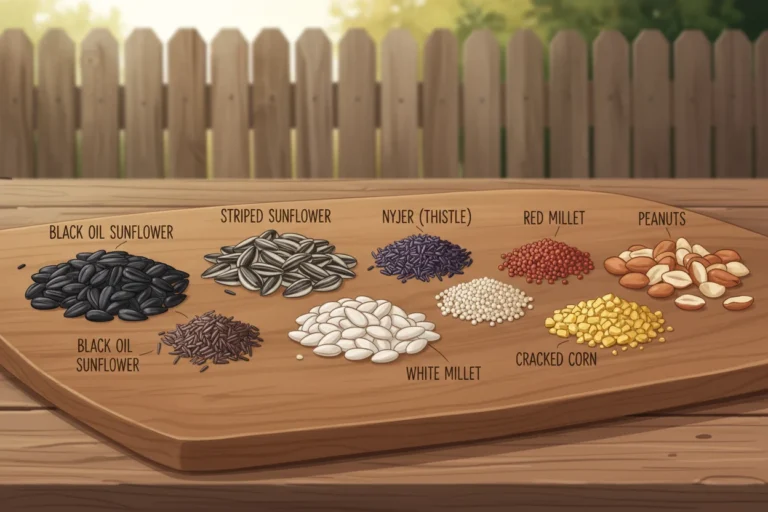 Top 10 Chinese Bird Feed Suppliers: Complete 2026 Guide
Explore bird-feed suppliers and product considerations for a separate bird-food purchasing brief.
Related Post

Furniture is a must for an office or a home. It is available at varying price points as Read more
Wood is extensively used in making furniture around the world. Wood can be molded in any shape or Read more

China offers many types of sofas at an affordable price. When it comes to Chinese Sofa Manufacturer, This Read more
Get Free Quote

Contact Us Get Free Quote!
* Please kindly fill out the form for inquiry
* we will reply to your inquiry within 24hours