

Slipper Manufacturers in China: MOQ, Samples & Quality
CHINA SLIPPER SOURCING · FROM BRIEF TO BUYER ACCEPTANCE
Looking for a slipper manufacturer in China? Start with the product: hotel guest slippers, plush house slippers or moulded EVA slides. Each needs a different factory route, sample approval and cost comparison. Choose against an agreed specification, then check the actual production site and order before shipment.
HunterSourcing helps buyers coordinate supplier comparison, samples, agreed factory checks and pre-shipment inspection. We are a China sourcing agent, not the slipper factory. You can review the proposed scope, costs and evidence before deciding how to proceed.
Start with a reference image, estimated quantity and destination. You do not need a finished technical pack for an initial discussion. If you already have a factory, tell us whether you need sample checks, factory verification or inspection instead of a new supplier search.
Prepared by the HunterSourcing sourcing team · Public references checked 27 October 2026 (Beijing). Published supplier figures below summarize product and commercial information for enquiry planning; confirm current capacity and availability for your order.

1. Match the manufacturer to the slipper programme
“Slippers” describes several products, not one interchangeable production route. A low-cost hotel guest pair should not be compared with a retail plush pair or a newly tooled slide using only price per pair.
| Programme | Construction and supplier questions | Buyer approval focus |
|---|---|---|
| Hotel / spa guest slippers | Nonwoven, terry, waffle or another agreed upper; sole material, thickness and anti-slip treatment; open/closed toe; individual packing. | Exact dimensions, seam finish, matched pairs, intended floor/use conditions, pack count and branding. Clarify disposable versus reusable use. |
| Plush / fabric house slippers | Upper and lining composition, pile/shedding, foam layer, stitched or bonded outsole and wash/care instructions. | Fit across sizes, seam and bond integrity, cushioning consistency, colour transfer, care performance and agreed durability checks. |
| Moulded EVA slides | Existing mould or new tooling; material grade, density/hardness, size tooling, shrinkage allowance and logo method. | Actual fit and dimensions after conditioning, pair weight, appearance, flexing and slip performance under defined conditions. |
| Footbed / buckle styles | Footbed construction, upper straps, fastenings, outsole and assembly route. | Footbed dimensions, strap adjustment, fastening strength, sole bond and representative wearer assessment. A style photograph does not define materials. |
Slippers, sandals and slides: define the use before the name
Open or closed toes alone do not settle the category. A slide can be used as casual footwear, while hotel slippers may have either toe construction. State the intended environment, wear duration and required performance. A textured sole or an “anti-slip” description is not evidence that a product is slip-proof.

2. Give every supplier the same measurable RFQ
Use one version-controlled specification and identify every unanswered field. Otherwise a cheaper quote may simply remove lining, change sole material, reduce thickness or exclude packaging.
| Field | Specify in the enquiry | Evidence to approve |
|---|---|---|
| Upper / lining / padding | Material and composition; fabric GSM or pile details where relevant; padding type/thickness; colour reference. | Material swatch and approved sample; supplier bill of materials; required composition or performance evidence. GSM is not applicable to every moulded component. |
| Sole / footbed | EVA, TPR, rubber or other agreed material; relevant hardness/density; thickness at defined points; tread and bond construction. | Measured sample and material identity. EVA means ethylene-vinyl acetate; TPR means thermoplastic rubber. TPU is a different material family. |
| Dimensions / sizes | Target size system, foot length guidance, internal usable length/width, measurement points and tolerances; left/right matching. | Graded size samples, measurement record and representative fit trial. Do not rely only on an EU/US/UK conversion label. |
| Logo / colour / artwork | Artwork version and rights; placement; print/embroidery/moulded mark; physical colour reference. | Approved artwork and decorated sample; test the decoration where relevant. A screen colour is not a physical approval standard. |
| Quantity / packing | Pairs per style, colour and size; size ratio; individual bag/box, labels, barcode, carton count and carton dimensions. | Signed size breakdown and packing specification; actual packed-carton sample and measured dimensions/weight. |
| Use / testing / care | Adults or children; destination; hotel/indoor/outdoor use; planned claims, care instruction and acceptance criteria. | Test scope agreed with an appropriate laboratory and buyer. Avoid unsupported medical, antibacterial, recycled-content or universal washability claims. |
Approve fit across the range
A sample that fits one person does not prove the complete size range. Ask which sizes are available for review and how grading will be checked before bulk.
Record the measurement points
Agree where internal length, width and sole thickness are measured and how the sample is conditioned. Soft uppers and moulded foam can produce different readings when compressed or measured in a different place.
Keep the approved version traceable
Identify the sample, specification revision, artwork and size set in the purchase order. Record who approved each item and which changes require renewed approval.

3. Check real MOQ and lead-time conditions
Request minimums per model, colour, size assortment and decoration. Separate sample quantities, a negotiable trial lot and repeat production. An existing sole mould may reduce development work; it does not automatically make every colour or size available.
| Source / offered product | Published figures | Conditions to clarify |
|---|---|---|
| WalkNice EVA slipper page | MOQ 1,000 pairs; sample lead time 3–7 days; production lead time 15–20 days. | Supplier-advertised figures, not an accepted quotation. Confirm model, mould availability, per-colour minimum, approval/deposit start point and calendar/working days. |
| WalkNice hotel slipper page | MOQ 5,000 pairs; sample lead time 3–7 days. | A different construction has a different advertised minimum. Reconfirm materials, logo, packing and bulk schedule for the actual hotel programme. |
| JNP furry slipper product FAQ | 300 pairs per colour using stocked soles; 1,000 pairs for new moulds. | Supplier-stated FAQ terms. Confirm the exact style, colour/size allocation and which moulds are included; request a current written offer and product-specific minimum from the supplier. |
| Chinee hotel slipper model HA-33195 | Advertised USD0.10–0.39 per pair; MOQ 1,000 pairs. | The page says price varies with material, logo, quantity and customisation. Delivery term is not established here: this is not a verified FOB price or a quote for plush/EVA retail footwear. |
| UTOP hotel slipper enquiry FAQ | Sample development about 7–14 days; bulk normally 30–45 days after sample approval and order confirmation. | Supplier-stated timing for its own scope; MOQ depends on construction and order details. Confirm material booking, peak-season queue, inspection and shipping separately. |
These examples show why a blanket “3–7 days for samples and 15–45 days for every order” would be misleading. New tooling, artwork revisions, material sourcing and size approval may add separate stages. Ask for a dated schedule covering sample, approval, bulk readiness, inspection, correction and handover; international transport is additional.
Sentu’s hotel slipper range also states that minimums vary with material, branding and packaging. Other discovery starting points include Uniseason’s footwear catalogue and Taihe’s slipper range. These supplier websites provide published product information for further enquiry and supplier comparison. Check the legal seller, actual factory and subcontracting route before paying.
4. Compare the complete cost, payment and delivery basis
| Item | Ask each supplier to quote | Decision or risk to resolve |
|---|---|---|
| Unit price / tiers | Currency, price per pair, exact specification and quantity breaks per colour/model; quote validity. If a seller quotes “pieces”, confirm whether that means individual slippers or complete pairs. | Obtain a current written FOB quote with a named port if that is your chosen term. A web listing or domestic price is not automatically FOB. |
| Samples / tooling | Sample pairs and sizes, artwork setup, mould ownership, maintenance, extra size moulds, courier and any agreed fee credit. | Record who owns tools, where they are stored, reuse restrictions and which approvals are included. Do not assume samples or new moulds are free. |
| Testing / inspection | Test panel, sample identity, inspection coverage, report, reinspection and corrective work. | A laboratory test, visual lot inspection and social audit serve different purposes and may be separately charged. |
| Packing / logistics | Pairs/carton, measured carton size and weight, protective packing, consolidation, named delivery place and transport scope. | Compare LCL/FCL and air options from the actual shipment dimensions. Confirm freight validity, transit estimate, destination charges and any FBA preparation requirements separately. |
| Payment / after-sales | Legal beneficiary, T/T currency, negotiated deposit and balance milestones, defect evidence, claim period and remedy. | Verify beneficiary details independently. Agree the balance trigger, inspection access, rework/replacement terms and claim process; do not assume universal 30/70 terms or an automatic refund. |
Make carton volume visible before choosing freight
Illustrative arithmetic, not a supplier packing claim: a carton measuring 60 × 40 × 40 cm occupies 0.096 m³. At a hypothetical 50 pairs per carton, 1,000 pairs use 20 cartons and 1.92 m³ before handling or pallet changes. Use measured packed cartons for a real freight quote. Carrier chargeable weight rules, available space and destination charges must be confirmed separately.
Divide the comparable total cost by the accepted saleable pairs, and show testing, tooling and freight separately. A low unit price can lose its advantage if size errors, rejects or oversized packaging change that denominator.
5. Approve the sample, then inspect the actual order
The approval sample defines a reference; the inspection checks the offered goods. Agree the lot definition, random sampling plan, defect categories and acceptance rule before production. If using AQL, record the standard/version, inspection level, lot size, sample size and acceptance/rejection numbers. An AQL number alone does not specify the inspection or guarantee zero defects.
- 1 · BriefUse, specification and sizes
- 2 · VerifySeller and production site
- 3 · ApproveSample, artwork and terms
- 4 · InspectActual lot and packing
- 5 · ResolveBuyer decision and correction
- 6 · CloseAccept or reject outcome
| Check | Evidence for the order | Scope limit |
|---|---|---|
| Sizes / pairs / quantities | Sample across the agreed size and colour breakdown; measure approved points, compare left/right pairing and count labels/cartons. | A carton label or one fit sample does not verify the entire assortment. State the actual inspection coverage. |
| Appearance / workmanship | Seams, loose threads, stains, mould marks, glue, decoration, colour match, lining and foreign material. | Use agreed defect photographs and classifications; a cosmetic inspection does not establish chemical safety. |
| Strength / durability | Relevant seam, upper/outsole bond, strap or fastening, flex and abrasion tests; record method, conditioning, limit and result. | Choose tests for the actual construction. A plush upper and a one-piece EVA slide should not receive an identical checklist by default. |
| Slip / fit / care | Defined floor surface, condition and test method for slip performance; size/fit assessment and care/wash checks if claimed. | Avoid slip-proof or medically beneficial claims without appropriate substantiation. Do not infer washability from appearance or materials alone. |
| Chemical / claim evidence | Destination- and material-specific test panel, actual sample identity, report date, laboratory and applicable limits. | An unrelated certificate, another model’s report or a sustainability logo does not prove this product or lot meets the buyer’s requirements. |
Intertek’s footwear testing overview covers physical checks such as sole bond, seams, flexing, slip performance and fit, alongside chemical testing. SATRA’s everyday-footwear guidance separately discusses slip resistance, comfort, chemicals, durability and fitting. These sources inform the test questions; they do not mean our agency or a shortlisted supplier has passed their tests.
Ask for evidence appropriate to the destination, material, intended user and product claims. If a supplier provides ISO 9001 or social-audit documentation, verify the issuing body, site, scope and validity; do not treat a management-system or workplace audit as a product test report. Agree relevant product requirements with the buyer and testing provider instead of attaching a generic list of certificate logos.

6. Resolve failed goods through a documented buyer decision
| Finding | Action | Closure and authority |
|---|---|---|
| A small, clearly separable portion fails | Identify and hold affected sizes, cartons or pairs. Report the findings and quantities. The buyer may approve shipment of the conforming portion when the agreed requirements permit it. | Supplier corrects or replaces held goods; arrange the agreed reinspection. Record the buyer’s acceptance of the remainder or the agreed rejection/remedy. |
| Most goods fail or a systemic defect affects the lot | Hold affected goods, report evidence to the buyer and obtain a corrective-action plan. After correction, organise a second inspection against the agreed specification and scope. | Keep the task open until the buyer accepts the supported result or rejects/abandons the goods under agreed terms. A supplier promise alone is not acceptance. |
| A safety, identity or unresolved suitability issue remains | Isolate affected goods, preserve traceable samples and seek the necessary evidence or specialist testing. | Do not release affected goods merely because the supplier offers a discount. Document the buyer’s supported decision and contractual remedy. |
Our quality inspection service can help coordinate the agreed checks and follow-up. Define reinspection fees, laboratory costs, corrective-work responsibility and limits before work starts. This process does not imply unlimited free retesting, a fixed product warranty or compensation beyond the agreement.
7. Three buyer situations and the next useful decision
These are planning scenarios, not claimed customer orders or testimonials.
A hotel group needs branded guest slippers
Prioritise upper/sole construction, guest size coverage, logo approval, individual packing and carton volume. Compare the cost for the same product and use conditions. Approve a packed pair and the delivery schedule before treating the advertised hotel-slipper price as a procurement budget.
A retail brand is launching plush house slippers
Review lining, fit across sizes, seams, sole bond, colour transfer, shedding and care instructions. Agree a representative size set and fit assessment. A soft handfeel in a showroom is useful, but it does not establish wash performance or repeat-order consistency.
An importer is developing private-label EVA slides
Separate an existing-mould colour/logo programme from a new design needing size tooling. Ask for material and dimension controls, approval stages, mould ownership and change costs. Use sample and bulk checks that address the actual foam construction rather than buying on a photo and a generic “non-slip” label.
8. Ask for a sourcing evidence pack you can review
| Record | What the buyer reviews | Evidence boundary |
|---|---|---|
| Supplier comparison | Legal seller, production address, manufacturer/trader role, construction capability and matched quotations. | Use websites and videos for supplier discovery, alongside a current factory-verification record. Ask what verification is included. |
| Sample approval register | Specification, size set, artwork, material references and unresolved items with version/date. | Separate proposed, received, tested and approved states. Do not silently replace materials after approval. |
| Inspection / testing record | Order/lot identity, coverage, methods, measurements, photographs, defects and any commissioned laboratory reports. | A blank template is not a completed inspection; retain original report identifiers and scope. |
| Release / follow-up record | Accepted and held quantities, buyer decision, correction, reinspection and final outcome. | Shipment authority, claims and closure must follow the agreement and documented buyer decision. |
Before paying a supplier deposit, confirm these four points:
- Who is selling and producing? Match the legal seller, Chinese business identity, contract and payment beneficiary. Record the actual production address and any outsourced steps.
- What has been approved? Keep the specification, size set, logo, packaging and tooling ownership in one approval record. List outstanding changes before bulk starts.
- What evidence will you receive? Agree the factory-check scope, sample/test identity, inspection coverage, photographs, defect record and report. A website video alone is not a site verification.
- Who pays and who decides? Confirm sourcing fees, supplier commissions or rebates if any, sample/tooling/testing charges, reinspection and exclusions. Agree balance-payment and shipment-release conditions in writing.
Our China sourcing services page explains the wider service scope; request a written fee basis for your project. You can also review our company and team information. A permissioned, completed slipper inspection report or customer reference would strengthen an appointment decision. We do not substitute unrelated results or stock photographs for that evidence.
Use our product sourcing service for scope and our wholesale shoes China guide for broader footwear buying routes. This page focuses on slipper construction, sample approval and order acceptance. The blank slipper RFQ and release checklist helps organise the brief; use its blank fields to collect supplier quotations and project-specific inspection requirements.
See the report format before commissioning an inspection
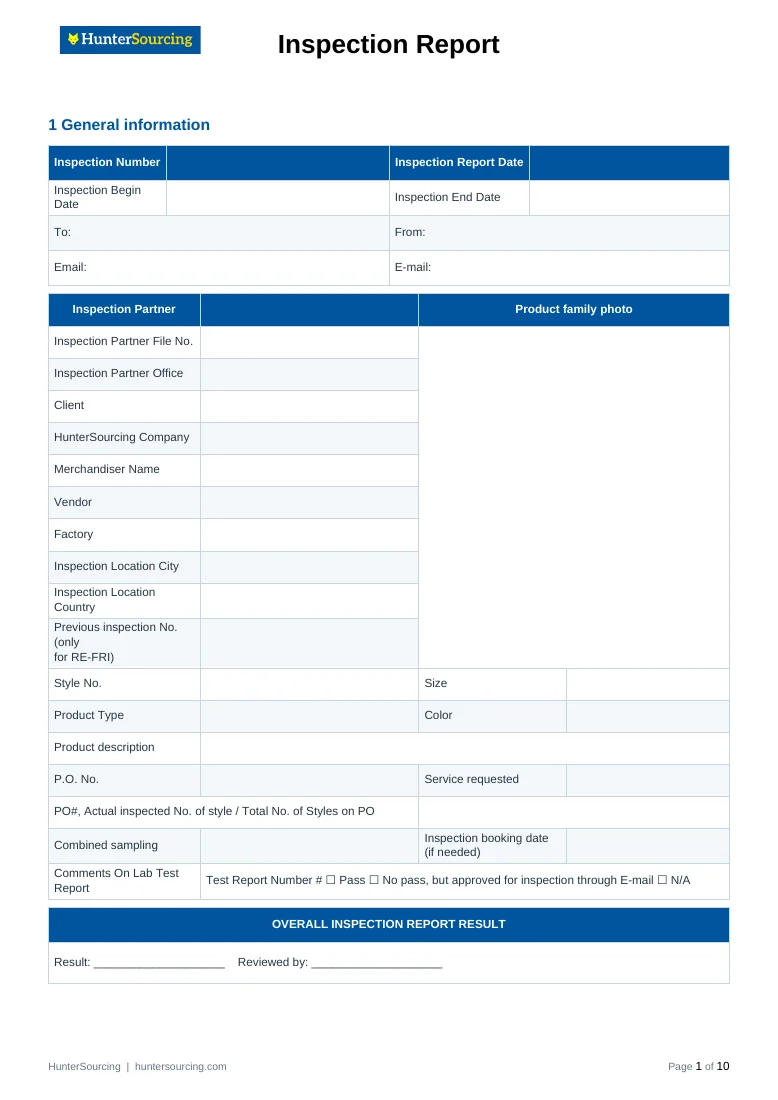
This HunterSourcing blank template shows the fields used to document a slipper-sourcing assignment. Review the fields used to identify the supplier, order, sample and inspection result. Your product specification and agreed testing/sampling plan must be attached for a real assignment.
View the blank Inspection Report PDF · Download the editable Word template
View the blank Factory Audit Report PDF · Download the editable Word template
Ask which records can be supplied for your own project, who reviews them and how nonconforming goods are followed up. A blank form should never be presented as a passed factory audit or laboratory result.
Slippers manufacturer: buyer FAQs
How can I verify a slipper manufacturer in China before ordering?
Confirm the legal seller and the actual production site. Ask which slipper styles and processes the facility handles, review relevant samples and capacity, and arrange an audit or independent verification appropriate to the order. A catalogue alone does not prove manufacturing capability.
What is the MOQ for custom or private-label slippers?
Minimums depend on the factory, construction, material, tooling, colour and size mix. Ask for sample, trial and bulk minimums separately, including any minimum per colour and size, and obtain written confirmation for your specific design.
Can I start with a small trial order of branded slippers?
Some suppliers may offer a smaller trial using existing soles, materials or packaging with limited branding changes. Ask which options are available, the minimum size and colour breakdown, sample fees and how a smaller quantity affects pricing; a low MOQ is not guaranteed.
How should I choose between EVA, PVC and other slipper materials?
Compare the actual material formulation and construction against the intended use, comfort, weight, flexibility, grip, durability and destination requirements. Request material specifications, representative samples and relevant test results for the exact model; material names alone do not establish performance.
How can I check slipper sizes and fit before bulk production?
Specify the target market, sizing system and agreed foot-length and width measurements. Review the supplier’s size chart and samples across the relevant range, agree tolerances and assess fit where practical. One sample size does not verify the entire size run.
How can I evaluate slipper grip on wet floors?
Tell the supplier which surfaces and conditions matter, such as bathroom tile or outdoor paving. Review the outsole design and arrange an appropriate slip-resistance test on the actual material and surface when needed. No slipper should be assumed slip-proof in every condition.
How do I assess comfort and durability over time?
Check cushioning, lining, strap attachment, sole wear and the intended frequency of use against an agreed sample. Request relevant construction and performance test information, including compression or wear tests where appropriate. A comfortable first impression alone does not establish service life.
Can heat or storage affect slipper shape and fit?
Ask the supplier how the specific material and design should be stored and transported, and request any relevant heat or dimensional-stability test conditions and results. Confirm packaging and handling requirements for your destination rather than assuming all slippers react the same way.
What should a slipper quotation include besides the unit price?
Compare the same specification, quantity, size mix, currency and delivery term. Separately identify sample revisions, custom molds and ownership, testing, packaging, freight and payment milestones. Confirm the production schedule after sample and artwork approval.
What happens if the shipment fails slipper quality inspection?
Record defects and affected quantities by style, size and lot. Release a separable accepted portion only on the buyer’s written instruction; hold the remaining goods for agreed correction and reinspection. If failures are widespread, hold the shipment while the buyer decides whether to accept, require correction or abandon the order under the agreed terms.
Turn your slipper reference into a comparable sample plan
Send the slipper type, intended use, destination, materials if known, size breakdown, quantity per colour and target delivery date. Add your reference image and logo requirements. We can discuss the sample, supplier-verification and inspection scope needed before you commit to bulk.
Sample availability, cost, timing and service scope are confirmed for the actual brief. Discuss confidentiality before sending proprietary artwork.
Tell us about your slipper sourcing project
Start your message with:
Reference image or slipper type:
Estimated quantity and destination:
Target delivery date:
Add these if known: materials, size/colour breakdown, logo and packing. Tell us if you need a new supplier, sample development or checks on an existing order.
What happens next?
- We review the reference and clarify unanswered product and buying requirements.
- We discuss the supplier/sample comparison or inspection scope, the proposed evidence and the fee basis. Agree paid sampling, factory visits or laboratory work before commissioning them.
- You decide whether to proceed on the agreed terms.
Your contact information is used to review and respond to this enquiry; see our privacy policy. Ask us to confirm response and project timing.
Related Articles
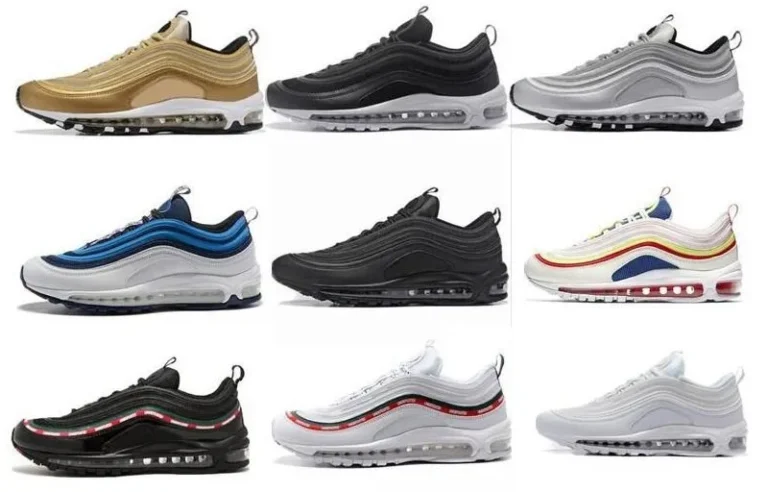 Wholesale Shoes China: Markets, Suppliers & Buying Guide
Compare China footwear markets, buying routes and supplier checks.
 Quality and Affordability: Unveiling China's Shoe Manufacturers
Explore manufacturer selection for a broader footwear programme.
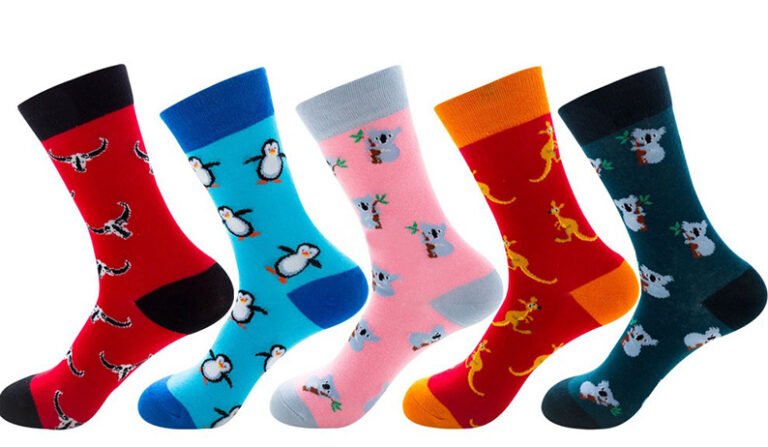 On the Footsteps of China's Top Sock Manufacturers
Plan complementary sock sourcing and compare supplier capabilities.
Related Post

Furniture is a must for an office or a home. It is available at varying price points as Read more
Wood is extensively used in making furniture around the world. Wood can be molded in any shape or Read more
China offers many types of sofas at an affordable price. When it comes to Chinese Sofa Manufacturer, This Read more
Get Free Quote

Contact Us Get Free Quote!
* Please kindly fill out the form for inquiry
* we will reply to your inquiry within 24hours